The Centre for High Economic Studies has prepared an analysis of the potential for ensuring energy supply security in the Western Balkan countries through the promotion of the prosumer market. The document provides a comprehensive analysis of electricity supply security in the Western Balkans with a particular focus on the role of prosumers in achieving clean, efficient, and sustainable energy development.
When it comes to energy production, WB6 countries predominantly rely on fossil fuels and oil, mostly achieving sufficient electricity production independently, and are highly energy-intensive. WB6 countries predominantly produce energy from solid fuels and oil (around 80%, except in Albania with 45%), which is significantly higher than the EU27. Electricity production from renewable sources is generally comparable or higher than in the EU27, but gas and nuclear energy are far less common in WB6 countries (9% compared to 36%).
In terms of energy dependence, WB6 imports between a quarter and a third of its total energy needs, except for North Macedonia, which relies on imports for almost 70%. To produce an equivalent amount of GDP, WB6 countries require about 50% more energy than EU countries. In the past five years, there has been no significant improvement in their energy efficiency compared to the EU.
Over the last six years, regional renewable energy capacities have been growing almost three times slower than in the EU, while fossil fuels still represent the majority of electricity production in the region. Additionally, although per capita electricity consumption between Western Balkan households and EU households is comparable, the economies of WB6 countries are less energy-efficient than the EU's, as they consume two-thirds more electricity for each unit of GDP produced.
Focusing on Serbia as a case study, this document explores the potential and challenges in integrating prosumers into its energy market. The aim is to simplify the adoption of renewable energy sources by promoting energy efficiency and increasing grid efficiency, flexibility, and resilience.
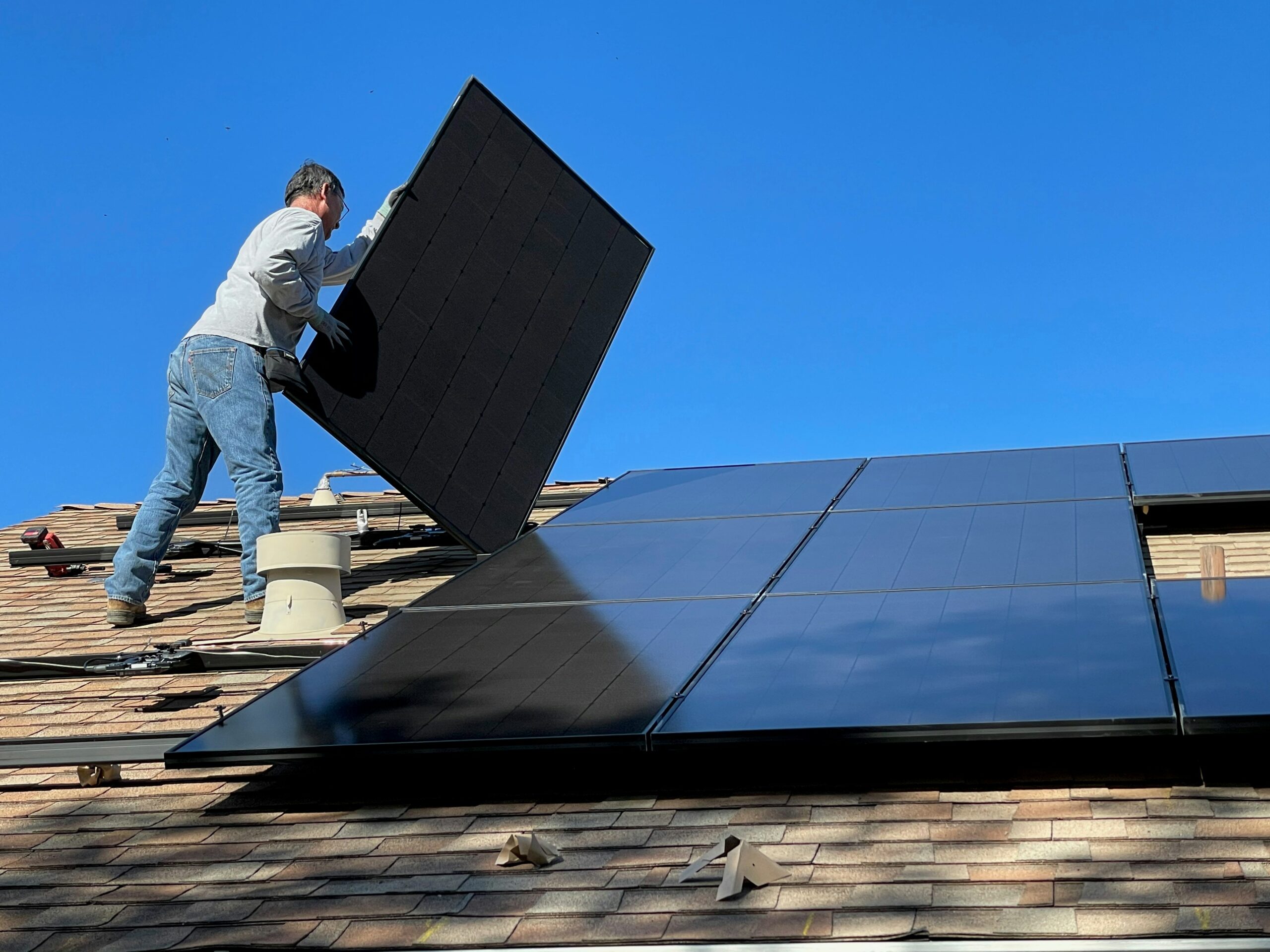
Serbia boasts significant solar energy potential, thanks to its favourable location and climate, with an estimated technical solar potential that could cover almost 80% of its current gross electricity production. Despite this potential, the development of the prosumer market in Serbia is quite slow and significantly lags behind other Western Balkan countries such as Albania, North Macedonia, and even the much smaller Montenegro.
The study identifies several challenges and barriers hindering the growth of the household prosumer market in Serbia and proposes recommendations for their development:
- Inform potential prosumers in detail about obtaining prosumer status, with appropriate support and services from state energy companies.
- Establish a certification scheme for solar panel installers and publish a list of certified installers.
- Digitize and standardize the procedure for obtaining prosumer status and ensure uniform training and expertise of Distribution System Operator (DSO) personnel across the country (especially outside Belgrade).
- Conduct a hosting capacity analysis to determine the distribution network's capacity for increasing the number of prosumers.
- Ensure that prosumers receive the same benefits as other end consumers, including discounts for timely payments and rational consumption.
- Revise the rules for awarding local subsidies to favour competent contractors and prioritise energy-poor households.
- Find a solution to enable the same conditions for apartment buildings and single-family houses.
- Legally recognise renewable energy communities as entities eligible to become prosumers, offering them specific incentives.
- Amend laws to allow third parties to install and manage solar power plants, enabling broader access to prosumer benefits.
- Explore and implement the ESCO model for residential prosumer projects, providing expertise and capital for solar panel installation.
- Expand the legal framework to encourage the formation and participation of energy communities in the prosumer market.
- Amend the Energy Law to oblige Distribution System Operators to create favourable conditions for high penetration of renewable energy sources connected to the distribution network.
- Introduce special tax incentives to promote the development of the prosumer market.
Download the integral document in English Here.
Study authors: Lazar Ivanović, CEVES and Pavle Medić, CEVES
The publication was developed with the support of the regional project “SMART Balkans – Civil Society for Shared Society in the Western Balkans” implemented by the Centre for Promotion of Civil Society (CPCD), Center for Research and Policy Making (CRPM) and the Institute for Democracy and Mediation (IDM) and is financially supported by the Norwegian Ministry of Foreign Affairs (NMFA).