
News
SNS izgubila republičku vlast, ali ima moć na lokalu: Šta to znači
Autor: BBC.com Dejana VukadinovićFunkcija,BBC News na srpskom Tvrđava vlasti Srpske napredne stranke (SNS) i Aleksandra Vučića formalno je srušena posle
Autor: BBC.com Dejana VukadinovićFunkcija,BBC News na srpskom Tvrđava vlasti Srpske napredne stranke (SNS) i Aleksandra Vučića formalno je srušena posle

Foto: Pixabay Autor: Biznis.rs Promena državne politike mogla bi da utiče ne samo na investicije i zapošljavanje već i na

Foto: Freepik.com Autor: Biznis.rs Redovno povećanje penzija nije diskreciona odluka Vlade, iako se u javnosti često tako predstavlja, već zakonska
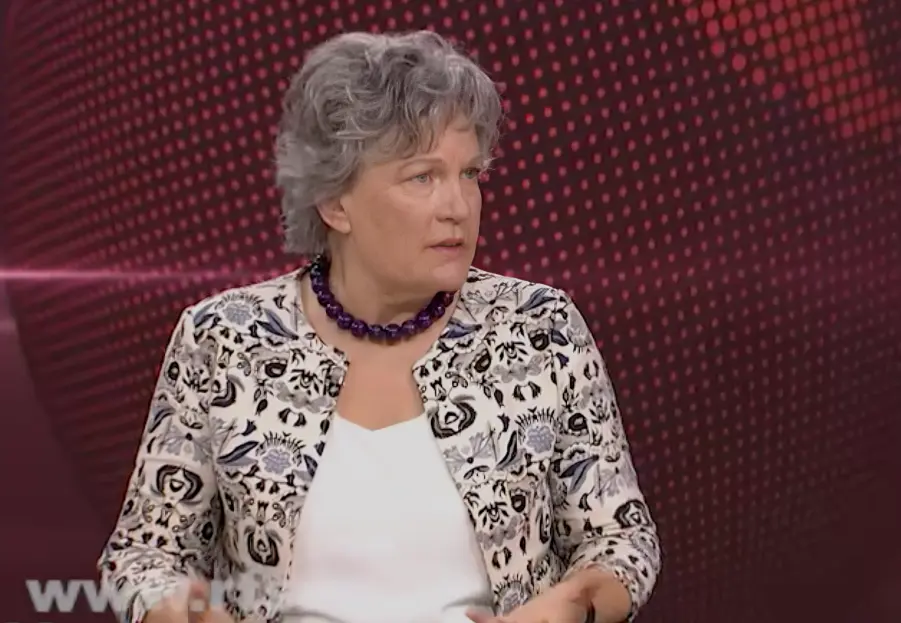
After the parliamentary elections, the NBS had to strengthen supervision due to the possibility of capital outflow, says former governor Kori Udovički and points out
The central bank is not a mailbox Author: Kori Udovički, President of CEVES The victory of the Student List was, even before it

The article published on the Biznis.rs portal is reproduced in its entirety, author: Ljiljana Begović.
Author: Vojislav Stojanović, economist The budget revision significantly increased the spending framework compared to the initial budget, by 1.5% of GDP (1.45 billion

CEVES conducted an analysis of Serbia’s Central Bank independence in September 2026.
The analysis was exchanged with the TAIEX peer review mission of the European Commission.
You can download the report or read it below.
Representatives of Working Group 17 of the National Convention on the European Union participated on September 2, 2026, in Belgrade in

Belgrade, October 2–4, 2026 (Friday–Sunday) The Centre for Advanced Economic Studies organizes a three-day training for public budget analysis, intended for representatives of organizations
CEVES analysis shows that the management of the current budgetary reserve in Serbia is extremely non-transparent. In a narrower scope of approximately 8 billion dinars of funds directly allocated from the current budgetary reserve, as much as 72% of the funds were allocated through the Government's General Secretariat, while for more than half of the items it is not possible to determine which budget program they belong to.
The Fiscal Strategy expects GDP growth to accelerate from 2.0% in 2025 to 3.0% in 2026, and then to significantly

Serbia might even pass the CBAM test, but it remains far from having a genuine green industrial policy. Regulations on CBAM and the domestic carbon price are being adopted, albeit under timelines that are tight for companies. While most of the framework already exists, certain bylaws and practical procedures needed to put it into effect are still missing. In the short term, the biggest problem will be verifying the data companies submit to EU buyers and declarants. In the long term, the key challenges are an underdeveloped green industrial policy and an unconvincing pace of the energy transition. Above all, there is the looming threat that EPS (Elektroprivreda Srbije) could be brought into a carbon-charging system equivalent to the European one (EU ETS): if electricity production from coal had to pay the full cost of emissions at the EU rate, this would become an unbearable burden for the economy, households, and public finances.

New business conditions for exporters and their suppliers CEVES invites you to a conference dedicated to the impact of the European Union's CBAM mechanism, domestic
Read in Vreme, June 3, 2026, the latest commentary by Kori Udovički (with a subscription of 1000 dinars, you will support independent journalism): „Dismantling of the Republican Secretariat

Kori Udovički CEVES calls on all those interested in the good governance of Serbia to oppose the recently adopted amendments to the decrees on the decision-making process
The Vienna Institute for International Economic Studies (wiiw) and Think Europe, in cooperation with the Institute for Development and Innovation in Serbia
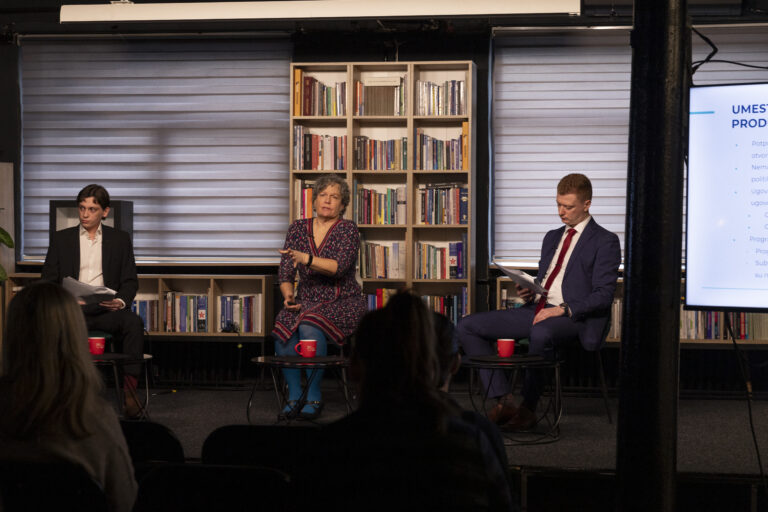
The Center for High Economic Studies (CEVES) presented a detailed analysis of the Republic of Serbia's Budget Proposal for 2026 at a press conference.
The National Convention on the European Union has submitted to the relevant institutions of the Republic of Serbia (Government, Ministry of Finance, National Assembly, and parliamentary groups) its

This text is not a scientific study, but a description of experience based on which I invite experts and practitioners to address this topic in preparation for establishing a better state.