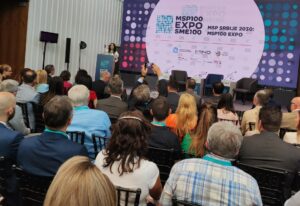
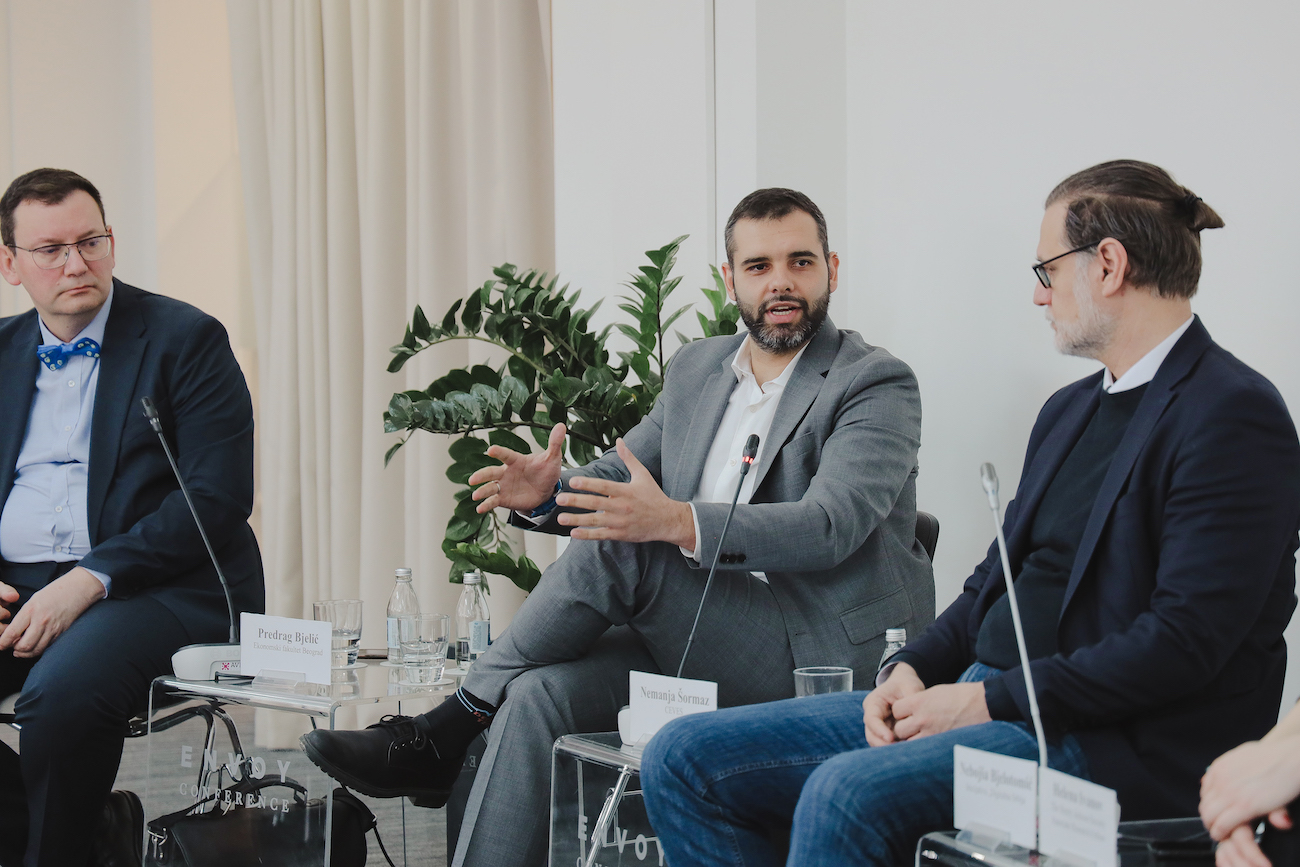
„Serbia has not two, but more business environments, one of which is for foreign companies, another for public enterprises, and the third business environment is for small and medium-sized enterprises,“ he explained Nemanja Šormaz, Director of CEVES, at yesterday's panel discussion „Europe is coming home, is this an opportunity for Serbia?“.
According to him, data shows that foreign direct investments have a favorable business environment and that they have been growing continuously for nine years, until 2022 when they were record-breaking (with the exception of the pandemic).
Speaking about the subsidies that foreign companies receive, which people perceive as huge, Šormaz states that subsidies are not only important for these companies to reduce their costs, because there are companies that receive a subsidy of one million euros, and export tens and hundreds of millions of euros annually. „Such companies say that these subsidies are important to them as a state guarantee that they will be a serious and reliable partner, which is the price you pay for an insufficiently developed business environment and the rule of law, a price you would not have to pay if it were more developed,“ Šormaz said.
On the other hand, small and medium-sized enterprises operate in a completely different environment, much less favorable, and they are the ones who have to face various grotesques and labyrinths of Serbian administration. „They do not enjoy all these benefits, they are often prevented from competing on fair terms in the market, in the labor market, to have access to the best students in schools and universities,“ says Šormaz.
According to him, this year the amount of subsidies that will go to foreign companies will reach around 200 million euros, while the state allocates about 30-40 million for the domestic economy. „However, the state views the domestic SME sector as an amorphous mass, offering them one instrument which is quite fragmented, so 1,000 companies apply and receive it,“ said Šormaz.
Given that it has shown that it can create a favorable business environment, the state should enable the same for its domestic companies.
Šormaz also stated at the Nova ekonomija panel that Serbia still attracts investments on an ad hoc basis, that it lacks a development plan, an investment plan, nor defined development priorities and goals – there is no predictability of what it actually plans and how.
The panel „Europe is coming home, is this an opportunity for Serbia?“ also included the Executive Director of the Foreign Investors Council Aleksandar Ljubić, researcher at „The Henry Jackson Society“ Helena Ivanov, Director of the „Digital Serbia“ Initiative“ Nebojša Bjelotomić, as well as a professor at the Faculty of Economics Predrag Bjelić.
The panel was organized by Business Info Group, publisher New economies, with the support of National Endowment for Democracy.