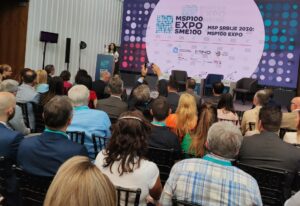
Key conclusion of the Conference „Serbia's SMEs 2030: Cooperation – a big step for the „small“ economy“ is that strengthening and expanding cooperation within small and medium-sized enterprises can greatly contribute to Serbia's development while achieving the key sustainability goals of the 2030 Agenda, such as decent employment, local community development, green growth, and above all – that no one is left behind in this development. After three decades of difficult economic transformation and development with many setbacks, small and medium-sized enterprises in Serbia have matured into an economic force that economic policy must focus on, as they actually constitute the larger part of the Serbian economy.
The Centre for Advanced Economic Studies (CEVES), in cooperation with the Youth Centre of Timok (TOC), organized this Conference on November 25, 2021, as part of the broader platform „Sustainable Development for All,“ supported by the Governments of Switzerland and Germany, and implemented by GIZ within the project „Public Finance Reform – Agenda 2030.„ Two thematic panels discussed successful examples of self-initiated cooperation models, from associations/clusters to incubators/parks, and the connection of domestic “champion" companies, which have successfully positioned themselves and are expanding in the global market, with other SMEs – smaller domestic companies.
„Through cooperation, i.e., association of SMEs worldwide, limitations and fragmentation arising from their limited size are overcome, creating benefits not only for the companies in question but also for the wider society,“ concluded the first panel, which included Slavko Lukić, Director of the Zlatibor Regional Development Agency, Miloš Grozdanović, Assistant Director of the Science and Technology Park Niš, Slađana Milojević, Director of the FACTS Fashion Industry Cluster, Igor Mitrović, Director of MIND Park, Zoran Pekez, Manager of Vojvodina Metal Cluster, and Vladimir Grujović from Bin Metal. „Through association in clusters or technological/industrial parks, companies with similar needs help each other in achieving them. Through these mechanisms, companies join forces in developing specific knowledge and personnel, establishing common services such as support in developing specific projects and resolving administrative-legal problems, and especially – joining forces for innovation and development.“.
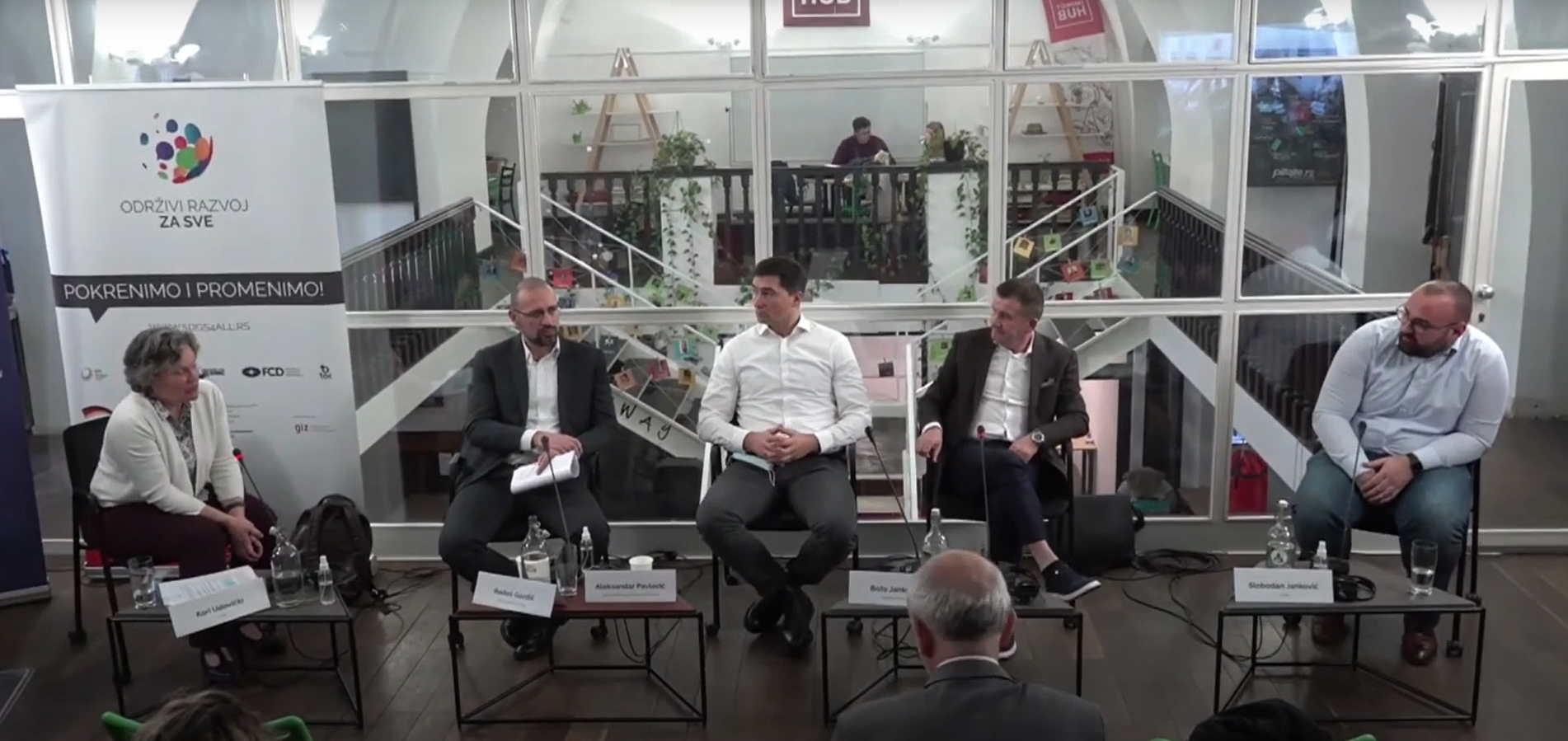
„Larger companies with a more successful presence in the global market should „pull“ smaller companies behind them, which are close to achieving higher business standards but cannot simultaneously invest in achieving them and conquering global markets. The benefit is mutual – already successful companies can focus on the most complex tasks and thus achieve greater value, while employees in smaller companies gain access to markets, training, and knowledge that they can then take with them. This also brings additional benefits to the entire society,“ concluded the second panel, which included Kori Udovički, President of CEVES, Radoš Gazdić, Director of the Development Agency of Serbia, Aleksandar Pavlović, Project Director of the USAID Competitive Economy Project, Božo Janković, owner of Enterijer Janković, and Slobodan Janković, Business Development Director of Inmold.
The SME sector is already working on developing its forms of cooperation, but the process could be much faster, more productive, and more comprehensive with greater support from institutions and development partners. For five years, there have been no programs to support their activities, and the state also needs to recognize such associations as authoritative and indispensable in dialogue with the economy about its needs. The need for representatives of all such associations to be included in the drafting of the Law on Business Infrastructure/Industrial Parks, which is currently underway, was particularly emphasized.
RAS's experience indicates that supporting vertical integration can also be very successful, although the challenges are more complex. RAS has been successfully working for three years on developing a number of suppliers for multinational companies present in Serbia, and the program is proving very successful. The program finances the procurement of specific equipment as well as organizational improvements for domestic suppliers, and the funds for this purpose will be increased from 200 million dinars to 300 million dinars in 2022. „The challenge is to shift the focus from helping already successful cooperation to selecting suppliers whose capacity needs to be raised to a higher level, regardless of ownership of the anchor company,“ concluded the Conference.
The USAID Competitive Economy Project clearly shows, using the example of the food industry, that with relatively little investment in networking and support for knowledge transfer – it is already possible to achieve a lot. Most can be achieved by investing in knowledge transfer – something that is certainly one of the state's greatest and most important obligations. „There is no consultant who can replace the knowledge and experience that a successful company carries within itself, which has a clearly recognizable path to further expand its success,“ said Aleksandar Pavlović, director of the USAID project.
A recording of the entire conference can be viewed at the following link.