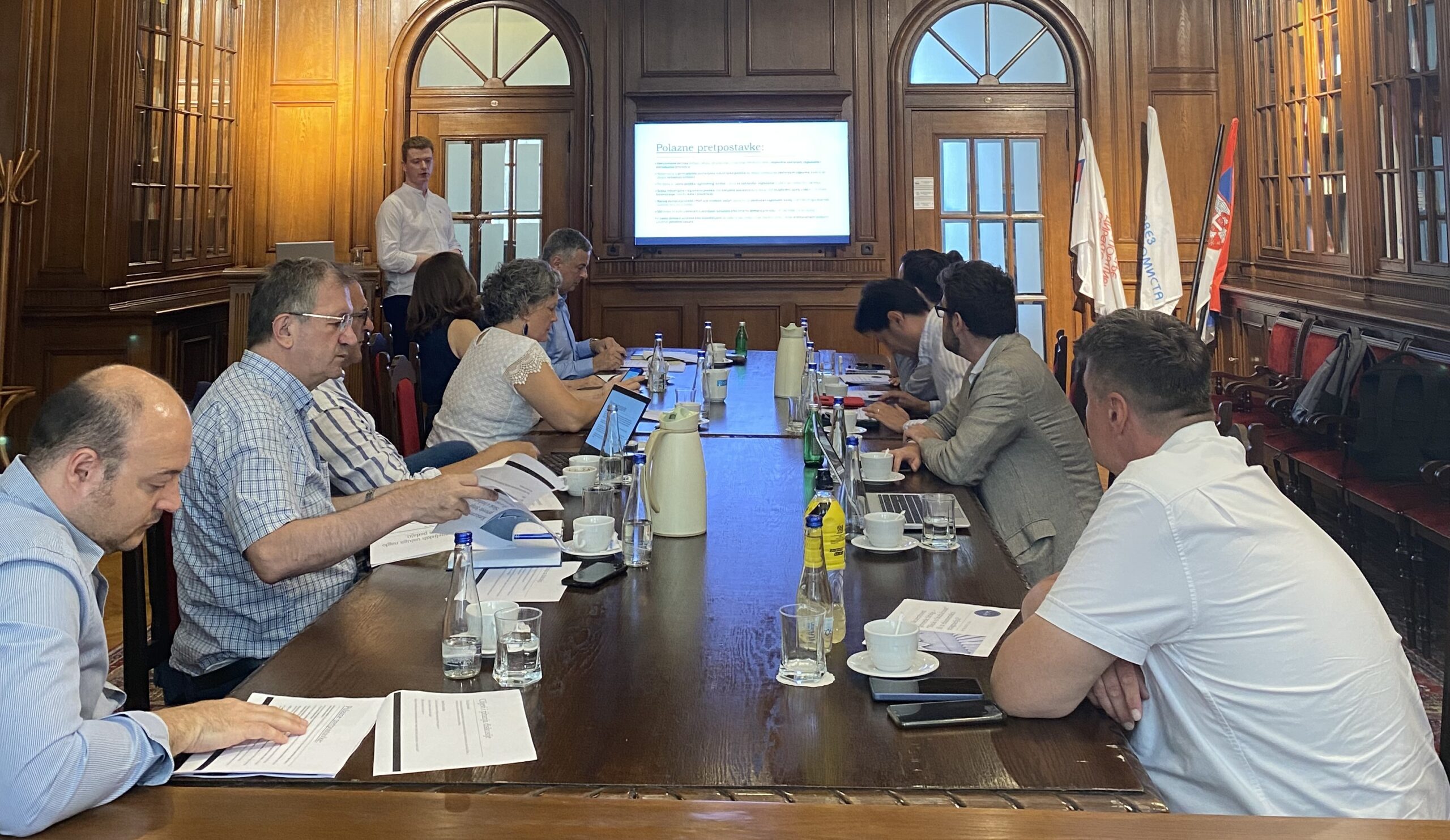
Roundtable „Competitiveness of the Serbian Economy – A Leap into the Future or Economic Stagnation?“, held on June 18th, organized by CEVES and the Serbian Economists Association, gathered leading domestic economists and representatives of the academic community.

The roundtable pointed to the limitations of Serbia's current growth model, which is focused almost exclusively on attracting foreign direct investment, often at the expense of neglecting and discriminating against the domestic SME sector. Such an approach, reflected in recent years by a shift in the structure of FDI towards predominantly non-tradable sectors and mining, does not contribute to strengthening the overall productivity and resilience of the economy, especially in less developed regions.
CEVES pointed out that such an approach leads to the emergence of the so-called „Dutch disease,“ defined as the crowding out of productivity-enhancing sectors, and long-term development, by sectors that boost foreign exchange inflows and measured GDP growth rates in the short term. This model deepens social inequalities and can lead to the stagnation of the entire economy in the long run.

Participants expressed concern about the erosion of competitiveness due to rising labor and energy costs and the appreciation of the dinar without a corresponding increase in labor productivity, nor the institutional capacity to raise that productivity. It was noted that Serbia, by many trends, such as real exchange rate appreciation and the gap between wage and productivity growth, is actually following patterns similar to those in comparable countries in the region – with the difference that these processes in Serbia are occurring at a lower level of development, whether measured as GDP/capita or by the complexity of production and services the country produces.

The quality of education and the institutional framework were identified as key causes of structural weaknesses – the education system does not develop modern skills, while political opportunism and institutional weaknesses undermine sustainable reforms.
The conclusion is that without deep institutional changes, more inclusive dialogue, and a shift towards knowledge and innovation-based development, Serbia risks falling into permanent stagnation instead of a „leap into the future.“ Finally, regret was expressed that the Statistical Office of the Republic of Serbia made a serious oversight in measuring Serbia's foreign trade in the previous two years, and that the public was not adequately informed about it.