Dear friends, colleagues, and partners
As the current year draws to a close, we share with you our New Year's newsletter – which, along with congratulations, hopes, and best wishes, also includes a quick overview of the economic situation and expectations in Serbia and the European Union, as well as a concise summary of CEVES' key activities and partnerships in 2024, looking ahead.
We also take this opportunity to express our strong support for the students and citizens who, through protests, are demanding that institutions start doing their job – honestly. Over the past years, CEVES has on several occasions released analyses describing how detrimental it is for Serbia's sustainable development when they fail to do so. This time, it has cost 15 lives. In the „CEVES Stance“ section, we contribute by assessing the justification of students„ demands for increased investment in higher education (and the lack of justification for the authorities“ attempts to circumvent this demand and "resolve it quickly").
ECONOMIC OBSERVATORY
Serbia's economic growth slowed in Q3 2024 to 3.1%, from 4.2% in Q2; however, Serbia remains one of the faster-growing economies in Europe. Growth is primarily driven by household consumption, state investments, and foreign direct investments, while exports also show the first mild signs of recovery. From a sectoral perspective, the slowdown is largely attributed to a sharp decline in agriculture (-8.0% in Q2, -8.6% in Q3) due to drought and a significant slowdown in retail and hospitality (7.4% in Q2, 2.8% in Q3) – sectors where consumers are facing significant price increases. At the same time, construction continues to grow (albeit slower than in 2023, 4.8% in Q3), while professional services and ICT remain key growth drivers (7% in Q3). Economic sentiment in Serbia reflects these trends, slightly decreasing but remaining positive overall.
In the EU27, GDP growth shows gradual improvement, increasing from 0.3% in Q1 to 0.9% in Q2 and 1.3% in Q3. Gradual recovery is further driven by improved consumer economic sentiment and demand growth, as well as growth in the service sector. However, challenges remain, particularly in industry, where economic sentiment is still in negative territory. Germany, the EU's largest economy, continues to stagnate, growing only 0.1% in Q3 2024 – while its industrial economic sentiment remains deeply negative, particularly due to difficulties in the automotive industry. The stagnation of the German economy represents a significant risk for Serbia, especially for export-oriented industries such as manufacturing and the automotive supply chain. The broader question of how the EU economy will restructure remains a key uncertainty factor for Serbia's long-term economic prospects.

CEVES POSITION
7% of GDP – or how the authorities tried to trick the students
Investment in higher education
Serbia allocates only 0.7% of its GDP to higher education, which is the lowest in Europe. Serbia is among the countries that allocate the least when expenditures are measured by state spending per student, even when these funds are adjusted for purchasing power parity (PPP). A similar situation exists with the average number of students per teacher, which in Serbia is far above the European average, significantly impacting the quality of education students can receive. This situation clearly positions Serbia at the bottom of the rankings (see graph below), with necessary urgent reforms and investments, which the students themselves have recognized.

Source: Statistical Office of the Republic of Serbia, Eurostat
Clear student demands
Through its budget, Serbia allocates around 540 million euros annually for higher education, and the students' demand was crystal clear: to increase these state allocations by 20%, or by 108 million euros.. Such a step would not only be symbolic but would enable significant improvements: hiring additional teaching staff, thus resolving the current unfavorable ratio of professors to students; increasing spending on key educational materials and equipment, such as laboratory instruments, libraries, and technical equipment for practical work; and renovating and modernizing infrastructure – from buildings to digital tools. A 20% increase would effectively double expenditures for improving the quality of education, as most of the current budget (around 80%) is spent on teaching staff salaries.
The authorities' play-acting
Instead of seriously considering the students„ demands and showing a willingness to invest in the future of young people, the authorities tried to trick them. The authorities“ quick "proposal," automatically labeled as fulfilling the demands, was an increase in allocations for material costs (with an unclear definition of what constitutes material costs, and we assumed the broadest scope) by 20%. However, material costs constitute only 5% of the total allocation for universities. Therefore, that „increase“ would actually, increase the total budget by only 1%, which is far from the students“ demands. Even if the “increase“ were to be at the level of “22-23" million euros as the authorities later announced, the, budget increase would amount to about 4%, leaving the point unchanged – because a 1-4% increase is still drastically less than the justified demanded 20% that would at least bring Serbia closer to CEE countries. Ironically, material costs include electricity, heating, and water bills – costs that largely return to the state budget. Thus, even that symbolic percentage increase would largely return to the state, not to the universities.
While perhaps not experts in budget classifications, the students clearly understood that the authorities were underestimating them. They recognized that „generous“ offer as nothing more than populist manipulation of the public, while the real problems of the education system remain unresolved. This attempt at quick deception further demonstrates how the authorities do not understand, or do not want to understand, the importance of investing in higher education as the foundation for societal and economic development.
RETROSPECTIVE & PERSPECTIVE
MSP100
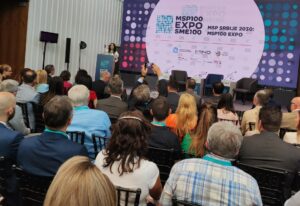
The third MSP100 Expo, held on October 18, 2024, at NTP Čačak, gathered 350 participants – over 100 representatives of leading SMEs and more than 20 key institutions, banks, donors, and organizations from the SME ecosystem. The need for the reintroduction of tax credits, as well as for more intensive state support, was emphasized, and we also considered the effects of falling demand in Germany and companies„ obligations regarding green and digital transformation. Banks announced that they expect interest rates to fall soon, which should stimulate investment momentum and facilitate overcoming the current interest rate gap. The “SUPER CHAMPION" awards were presented to companies that, based on their export volume (over 10 million euros) and number of employees and/or added value, stand out even from most MSP100: Divi, MNG Plastik Gogić, Sirogojno Company, Svetlost Teatar, AMM Manufacturing, ATM, Enterijer Janković, Inmold Group, Quantox Technology, Tehnoplast, and Unipromet.
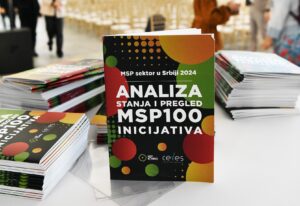
Recall how it all looked. Also, we invite you to watch Analysis of the SME Sector Situation and Overview of MSP100 Initiatives.
During 2025, we plan innovations within the MSP100 platform, through a series of smaller, thematically focused gatherings, with persistent advocacy for key MSP100 initiatives and the improvement of the SME sector's position.
MSP Compass
Presented on May 17 at the Chamber of Commerce of Serbia, MSP Kompas is an interactive platform that provides insight into nine key aspects of the Serbian SME sector's business – from business models and the regulatory environment to digital and green transition. The platform provides and opens data based on survey results (over 4,000 companies), financial reports of 40,000 companies, and the latest statistics related to employment, wages, prices, and interest rates.
During 2024, MSP Kompas was the first to point out the worrying position of domestic SMEs, squeezed between slowing demand in the EU and rising costs (energy and wages), which reduced investments and delayed digital and „green“ solutions. Based on these insights, CEVES launched a series of initiatives, including the Financing Fair within MSP100 Expo, and highlighted the reintroduction of tax credits as an important step towards sustainable growth.
Try MSP Kompas and explore data relevant to your future business steps! ➡ www.mspkompas.rs
During 2025, CEVES will present MSP Compass 2.0, an improved version of the platform with enhanced functionalities and user experience. New content will also include quarterly reports on the business environment and the opportunity for companies to compare their results with competitors in more than 50 points.
Development through partnerships and cooperation
CEVES in 2024, as a national partner, supported the implementation of USAID's five-year project „Big Small Business“ – the largest private sector development initiative in Serbia. It also signed a Memorandum of Cooperation with SME Hub (an initiative of the Swiss Agency for Development and Cooperation – SDC), further strengthening support for domestic SMEs through access to quality services and global value chains.
Through Framework Partnership Agreement (FPA) with the European Union, CEVES worked on strengthening economic governance and more competitive development of Serbia. As coordinator of the Convention's working group for Chapter 17 – economic and monetary policy, it monitored the implementation of reforms and advocated for better quality economic growth and equal treatment of domestic companies. Within the framework of the platform „Sustainable Development for All“, CEVES highlighted the contribution of the SME sector to sustainable development during 2024 and proposed improvements to the institutional environment for sustainable development, and detailed findings and proposals will be presented to the public through a monitoring report in early 2025.
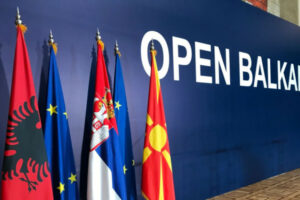
Within the regional network WebEcon, CEVES dealt with issues of energy and food security and state aid, contributing to the creation of coherent and sustainable policies in the Western Balkan countries.
Within the framework of cooperation with EBRD, CEVES conducted a diagnosis of the SME sector in the Western Balkan countries during 2024, with over 100 interviews with key decision-makers and actors in the region, identifying key measures for improving the SME sector. In early 2025, CEVES will present to the public more than 50 concrete and feasible measures intended for the countries in the region.
We wish you a pleasant holiday break and a healthy, smart, persistent, and successful 2025 in every sense!

Your CEVES Team
Kori Udovički, Nemanja Šormaz, Jelena Radulović, Pavle Medić, Marijana Radovanović, Lazar Ivanović, Ivona Janović, Dušan Kovačević and Vesna Stefanović