The past quarter saw Serbia's economy slow its growth, and witnessed uncertainty in global economic policy, and perhaps domestic political crisis, begin to spill over into economic sentiment. In the „CEVES View” section, we look at signs that institutional weakness (rather than protests) has begun to visibly hinder economic growth (as opposed to sustainable development, which it has been hindering for longer).

According to flash estimates, in Q1 2025, Serbian GDP growth significantly slowed (2.1% vs. 3.9% in 2024), primarily due to, by all accounts, a further slowdown in both public and private investments that began in the second half of 2024, as well as a further decline in goods exports to Western markets. Although direct data is not yet available, we conclude this based on a sharp decline (-55%) in foreign direct investment in the first quarter of this year, as well as state capital expenditures (-8%) throughout the quarter, compared to the same periods last year. The value of exports of ICT and other creative services, as well as ores and base metals, continued their strong growth from the previous period, and most likely explain why growth remained positive.
The change in export structure is reflected in the growth of exports from the mining and base metals sector (+16%), with a simultaneous decline in exports from activities involved in global value chains, such as the automotive industry and related branches, as well as those where competitive advantage is based on low labor costs (-20%). Service exports, led by ICT, recorded real growth and made a significant positive contribution. Domestic consumption remained the only stable component: state consumption grew slightly in real terms, while private consumption likely began to weaken, judging by the decline in overnight stays by domestic tourists, lower VAT collection, and stagnation in retail sales.
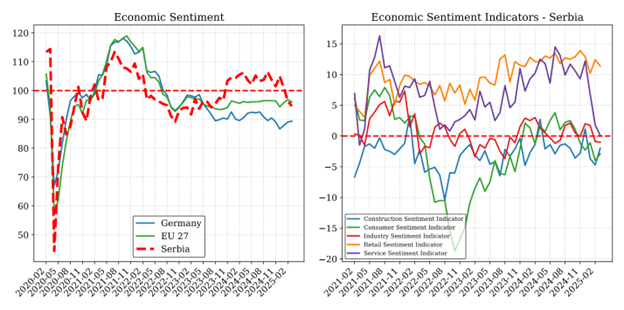
Economic sentiment in Serbia at the beginning of 2025 fell below 100, to the level of the EU 27 average, primarily due to a sharp decline in sentiment in the services sector – to one of the lowest levels since the pandemic (although, unlike then, it is still above 100). Sentiment in the industrial and construction sectors is falling from a slightly positive to a negative level, with a much sharper decline in construction. This is also reflected in official data – the value of construction works performed in Q1 2025 decreased by 1.4% at current prices, or 5.6% at constant prices. At the same time, sentiment in retail remains relatively stable and positive, although consumer negative sentiment has deepened somewhat. The decline in sentiment in Serbia is occurring in the context of broader European stagnation – sentiment in the EU27 remains slightly negative and little changed despite falling interest rates, while in Germany, the country most important to us, which ended 2024 with a decline in economic activity, it is at one of its lowest levels since the pandemic.

Protests were certainly not the main culprit for the slowdown in economic growth in the first quarter of this year, but they exposed the fact that Serbia's economic growth in recent years has stood on increasingly weaker foundations.
It is normal for economic growth in a country to slow down when public investments fall by 8%. But it is not normal for public investments to fall because „there is no son of a mother who will sign any paper.“ In fact, it was not normal for the sons of mothers in Serbia to sign anything at all until now, because the President of the country urged and forced them to do so through parallel channels of power that he built precisely to bypass institutions.
The infrastructure built in this way has begun to crumble, and the foundations on which such growth was based are also crumbling. The easy victories offered by Serbia's collapsed economic potential during the transition have been achieved. We hope that Serbia's engineers will no longer allow irresponsible construction.
For further sustainable growth, and especially development, it will be necessary for institutions to enable legal certainty and productivity growth by listening to the needs of the economy. This primarily implies eliminating discrimination against the domestic economy, measures to support its investments and modernization (digitalization and alignment with the requirements of the green transition), but also ensuring increasingly better and more relevant educational profiles – which are necessary steps to replace investors who are currently leaving with those who need knowledge and skills.
None of this is in sight.
Read more on this topic Here.

Sustainable and resilient communities start “locally”
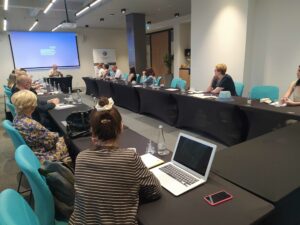
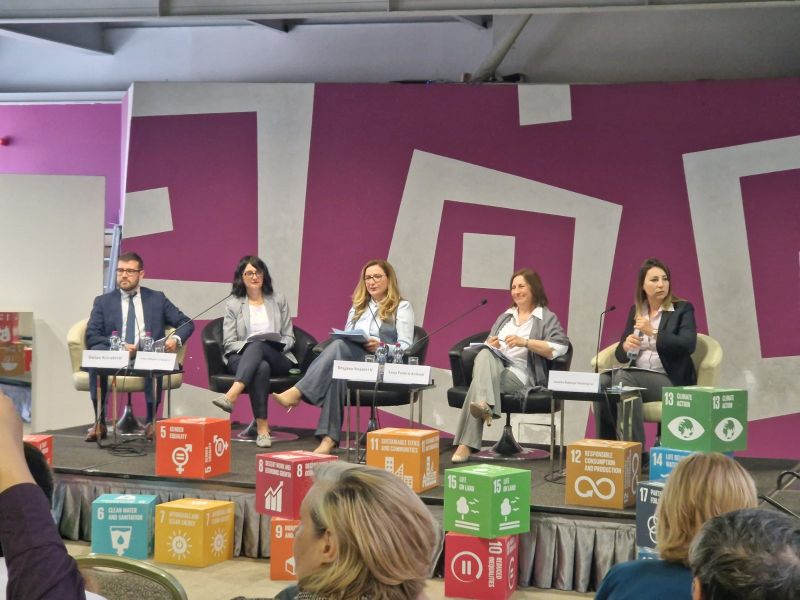
At the final conference of the project „Sustainable Development for All,“ held on April 4 in Belgrade, CEVES organized a panel discussion „Planning the Development of Sustainable, Inclusive, and Resilient Communities,“ during which participants from various sectors – local self-government, development agencies, and civil society – emphasized the key role of local actors in achieving sustainable development goals.
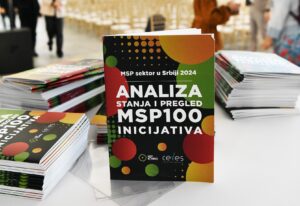
The discussion highlighted the obstacles communities face in a centralized system – such as lack of autonomy, limited capacity, and poor communication with the local economy – but also pointed to the potential of inter-municipal cooperation and good practices, such as the „Green-Blue Communities“ project and CEVES's MSP100 initiative, which show how concrete policies can be developed from the bottom up, empowering local businesses and fostering dialogue with the community.
The panel's conclusion was clear: true sustainable development requires fundamental decentralization and systemic support for local initiatives.
SMEs in focus of sustainable development at Green Peak Festival
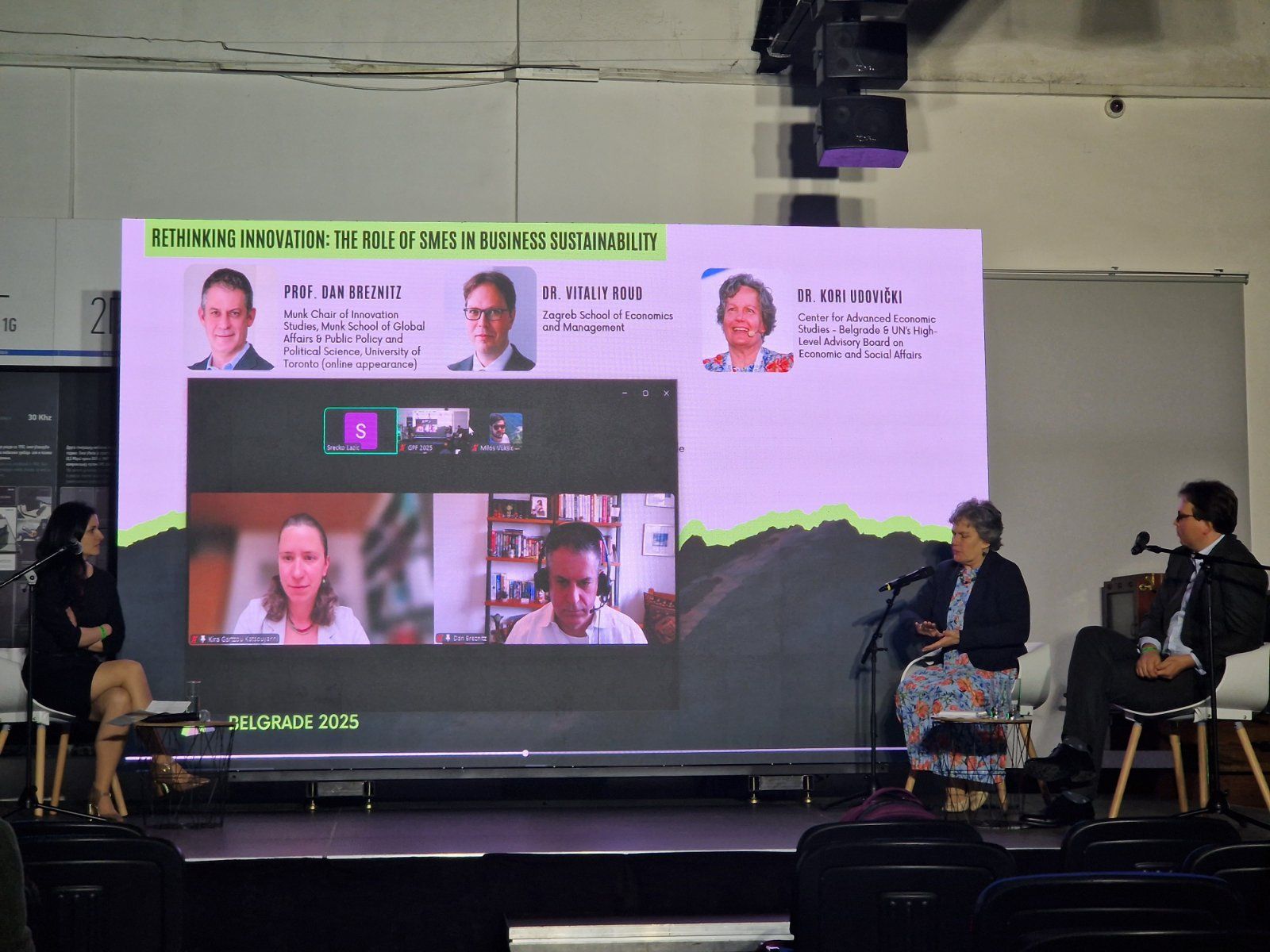
CEVES was a partner of the first Belgrade edition of the Green Peak Festival – the largest Austrian conference dedicated to sustainability – held on April 3. As a long-time advocate for the importance of small and medium-sized enterprises (SMEs) for sustainable and inclusive growth, CEVES premiered a short film promoting the best examples of innovative and successful Serbian SMEs. The film was designed to highlight their contribution to sustainability and business resilience, and is available for viewing via LINK.
Within the conference, the President and Director of CEVES, Kori Udovički, participated in a panel discussion that was created, organized, and led by Sonja Avlijaš at the Faculty of Economics of the University of Belgrade, „Rethinking Innovation: The role of SMEs in Business Sustainability“. Kori Udovički emphasized that Serbian small and medium-sized enterprises, especially exporters, are rooted in their local environments and highly innovative, as this is the only way they can survive, a point with which the other panelists agreed.
CEVES at a panel on Serbia's development challenges
A panel discussion was held, organized by the Serbian Academy of Sciences and Arts (SANU), the World Bank, and CEVES „Is Serbia in the middle-income trap?“, on the occasion of the presentation of the World Bank report „Greater Heights: Growing to High Income in Europe and Central Asia“.
The key findings were presented by Dr. Ivailo Izvorski, World Bank Lead Economist for Europe and Central Asia, while the discussion included Academician Pavle Petrović, Dr. Milojko Arsić, Dr. Kori Udovički, and Dr. Nicola Pontara.
The panelists agreed that domestic private investment remains low, and that Serbia's growth continues to rely on foreign investment and public consumption.
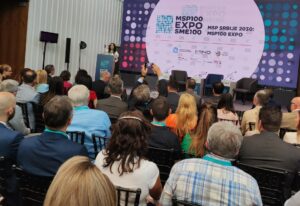
CEVES specifically pointed out that small and medium-sized enterprises in Serbia almost never manage to grow into large ones – even though among them, as the example of MSP100, shows, there are companies with high potential for innovation, export, and growth. For these companies to become the backbone of sustainable development, deeper institutional and political reforms are needed to accompany and support their growth beyond the SME framework.
The report is available at the link: Greater Heights: Growing to High Income in Europe and Central Asia.
Is the Serbian economy suffering from Dutch disease?
Introduction to the analysis of the need for a new economic policy
In early June 2025, CEVES will organize a round table with leading economic experts in Serbia to open an expert-based discussion on whether the Serbian economy could be diagnosed with a specific form of Dutch disease. This will be the first in a series of round tables aimed at recommending economic reforms and policies that will enhance Serbia's competitiveness, for the benefit of citizens striving to establish the rule of law and responsible institutions.
Development through partnerships and cooperation
CEVES has launched a new project with the International Labour Organization (ILO) with the aim of researching how climate change affects employment in Serbia and identifying policies that promote a just transition to green jobs.
CEVES has initiated a market assessment for factoring in the Western Balkans for the International Finance Corporation (IFC), with the aim of identifying barriers and opportunities for the development of this financial instrument as support for the growth of small and medium-sized enterprises in the region.
Thank you for following our work and contributing to the dialogue on Serbia's sustainable and just development!
Your CEVES Team
Kori Udovički, Pavle Medić, Lazar Ivanović, Ivona Janović, Dušan Kovačević, Bojan Janković, Velibor Tatić, and Vesna Stefanović