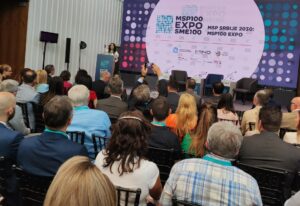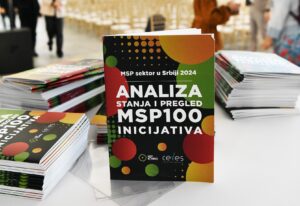
Organized by the Center for Advanced Economic Studies (CEVES) and USAID's Project "Big Small Business," and with the support of the Chamber of Commerce of Serbia, the SME Compass was presented today, an innovative tool that effectively shows a snapshot of the current situation in the most dynamic part of the Serbian economy sector, small and medium-sized enterprises, on whose performance a significant part of the entire Serbian economy depends.

„The small and medium-sized enterprise sector faces the greatest business challenges, and addressing them requires an assessment of the current state of technology and financing models, the development of an adequate strategy for sustainable business, as well as comprehensive support from all institutions in the system and international organizations,“ said Mihailo Vesović, Director of the Sector for Strategic Analysis, Services, and Internationalization at the Chamber of Commerce of Serbia.

Vesović pointed out that SMEs account for over 50 percent of Serbia's exports, which shows their importance, and as part of supply chains, they are crucial for the success of large investments. „For large companies to be successful, it is important for small and medium-sized enterprises to operate well and be competitive in the market, and to have appropriate tools,“ said Vesović, emphasizing the importance of joint work on strengthening the SME sector through cooperation with donors and international partners to ensure long-term sustainability and competitiveness.

Some of the main observed changes in the SME sector in 2023, based on the results of the SME Compass Index, include reduced company investment in response to current crises and uncertainty; mild dissatisfaction with the business environment, particularly tax burdens, while only 10% of companies plan green investments, and they perceive regulation as a burden; as well as a noticeable increase in employee wages (due to a shortage of adequate labor in the job market, an increase in the minimum wage, and wage increases in the public sector), even though companies' business situations have worsened. Nevertheless, what is encouraging is that companies' expectations regarding their business situation and planned revenues in the next year are mostly positive.
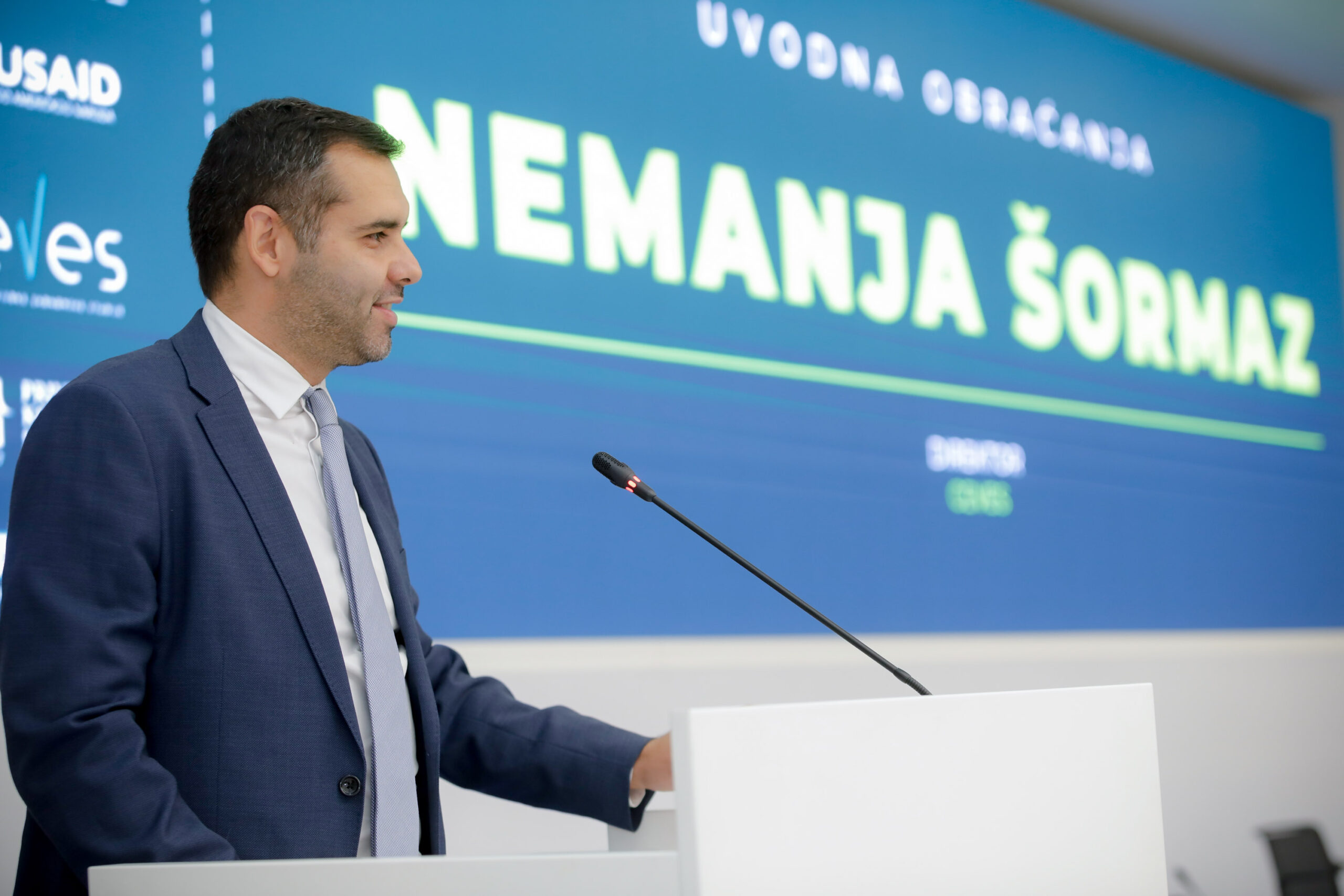
The presentation, presented by CEVES Director Nemanja Šormaz and CEVES Deputy Chief Economist Pavle Medić, can be downloaded Here.

“The purpose of the SME Compass is to provide institutions and businesses with good data to make better strategic decisions, because data is the basis for all future steps today. That was the reason for launching the SME Compass – to fill a gap in data, information, knowledge, and communication, which prevents the continuous selection of better solutions,” said CEVES Director Nemanja Šormaz, adding that the SME Compass helps small and medium-sized enterprises gain timely insight into global trends affecting their business, and helps state, international, and financial organizations clearly understand their structure and create support programs for the SME sector accordingly.

„The health and growth of small and medium-sized enterprises are key to Serbia's overall economic success. With such great importance, it is not surprising that the demand for accurate, timely, and useful information about the SME sector is high. We are all interested here in better understanding their performance and needs, and today we are one step closer to the information needed to accelerate their growth,“ said Brooke Isham, USAID Mission Director in Serbia.
MSP Compass displays the achieved level of competitiveness and development of the SME sector according to nine key aspects of business, such as business expectations and results, business model, regulatory environment, skills development, digital transformation, green transition, etc. The results represent 11 sectors and 25 official districts of Serbia, allowing for a deeper and more precise overview and understanding of the needs and performance of the small and medium-sized enterprise sector. The index was created based on the financial reports of over 40,000 companies in Serbia and surveys that included over 4,000 entities.

In the subsequent panel discussion, representatives from the Ministry of Economy, the World Bank, the Chamber of Commerce of Serbia, the EBRD, ProCredit Bank, and the Big Small Business Project discussed the development directions that their organizations provide to the SME sector, in line with the presented analysis and indicators, and how to better align and direct current support programs to better respond to the specific needs of the Serbian economy.
[ngg src=“galleries“ ids=“68″ display=“basic_thumbnail“ thumbnail_crop=“0″]