The German-Serbian Chamber of Commerce conducted a survey on the business environment in Serbia among its member companies during February and March of this year. The latest results indicate that there is continued confidence of German companies in Serbia as an investment destination, despite challenges in geopolitics and the global economy. The survey results show that the assessment of the economic situation in Serbia for 2023 has not worsened; on the contrary, optimism in the Serbian economy is growing again.
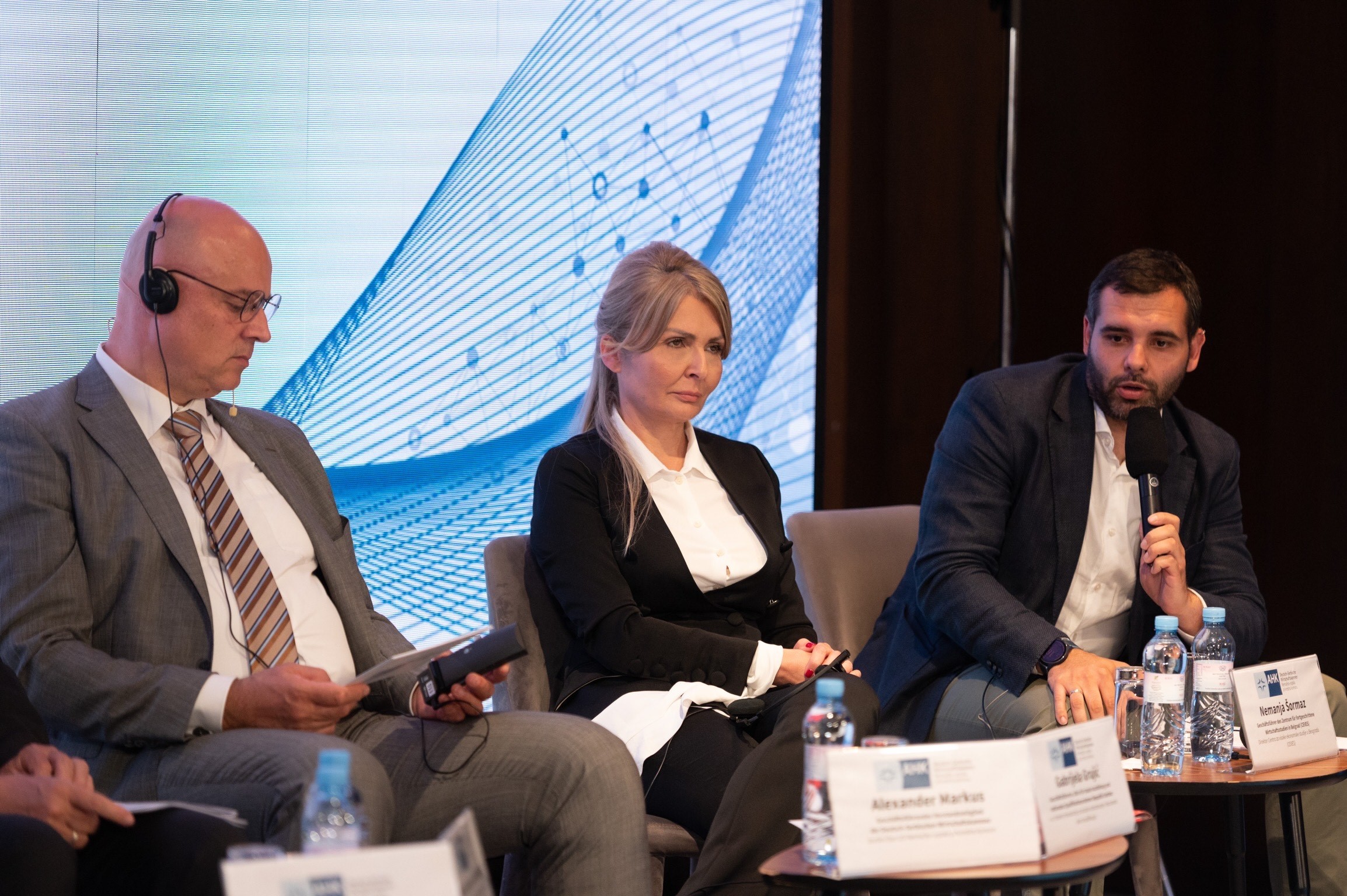
„German companies confirm year after year that Serbia is a good host for their, mostly export-oriented, business ventures, and they express that they would gladly invest in Serbia again. In previous years, Serbia has truly prepared a favorable business environment for these companies – from macroeconomic stability, through infrastructure investments, to a specialized agency that ensures that state and local administration are truly at their service. Reforms in the area of the labor market and (dual) education, primarily aimed at larger foreign investments, have been particularly significant. There are also subsidies – which are not only financially significant for companies but also a confirmation of the state's partnership relationship, as well as compensation for visible shortcomings in the rule of law and corruption, which the companies themselves notice,“ said CEVES Director Nemanja Šormaz at a panel discussion on the presentation of the survey on business conditions in Serbia for 2023, conducted by the German-Serbian Chamber of Commerce.
„However, such a favorable business environment is tailored and adapted mainly for (larger) foreign firms, and domestic small and medium-sized enterprises do not enjoy it. Also, after 10 years of focus on attracting foreign investments, the question of the further economic viability of certain measures is justifiably raised – primarily subsidies aimed at employment, in a situation where unemployment in Serbia has been reduced to a reasonable level, and the lack of adequate staff is becoming the number one problem for both foreign and domestic companies. In the past year, there has also been noticeable concern among companies due to high inflation, double that in the EU, as well as Serbia's geopolitical position due to its ambivalent attitude towards the war in Ukraine.“ Šormaz pointed out.
German and Serbian companies, members of the German-Serbian Chamber of Commerce, have positively assessed the economic climate in Serbia and expressed positive expectations within their own businesses, and despite the current crisis, 87% of participating companies would invest in Serbia again. For the third year in a row, factors related to the Serbian labor market receive a positive assessment: qualification, productivity, and willingness of employees to work.

Almost half of the surveyed companies (47%) assess their business as good, and only 6% as insufficiently good. Business forecasts for the current year also contain optimism – only 7% of respondents fear a deterioration.
When it comes to business development and additional employment in 2023, 44% of surveyed companies plan to increase the number of employees, 52% of companies do not plan any changes in the number of employees, while only 3% of respondents assume that the number of employees in their companies will decrease. This result unequivocally indicates that German companies will continue to create new jobs in Serbia.
During 2023, 34% of surveyed companies plan to increase investments, while 13% announce a decrease in investments. When evaluating the factors affecting business in Serbia, the worst-rated were: labor availability, the fight against corruption and crime, political and social stability, as well as transparency in public tenders. Satisfactory ratings from German-Serbian companies were received by criteria related to the Serbian labor market: companies are satisfied with the qualification, productivity, and willingness of employees to work. For the first time, among the factors of satisfaction are conditions for research and development, as well as the quality and availability of local suppliers.