February 14, 2018.
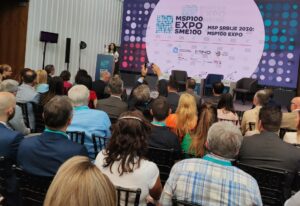
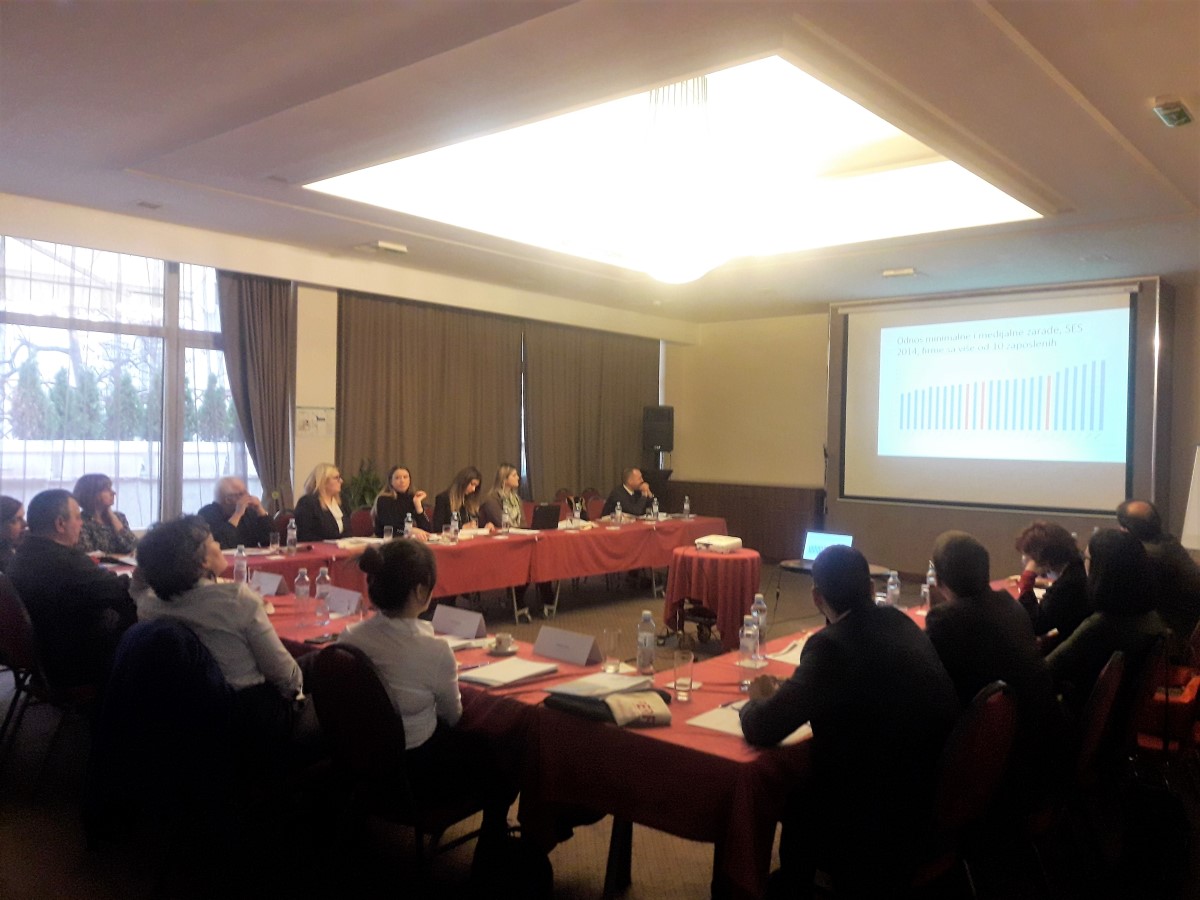
The Centre for High Economic Studies held a workshop on Tuesday, February 13, 2018, titled „How the Quality of Economic Growth Affects Human Development“. The workshop was held within the framework of the project „Using the Sustainable Development Goals as a Guide for Redirecting Social Science Research: A Pilot Project“ supported by the PERFORM project (PERFORM is a project of the Swiss Agency for Development and Cooperation implemented by HELVETAS Swiss Intercooperation and the University of Fribourg), and which is part of the broader „Preparatory Project for a Social Dialogue Platform on Sustainable Development Goals in Serbia“ supported by the Swiss Agency for Development and Cooperation. With this workshop, CEVES initiated the process of improving knowledge about the quality of economic growth needed within the program for supporting the nationalization and monitoring of sustainable development goals.
The workshop was opened by Martin Dietz, PERFORM Manager, and Kori Udovički, CEVES President, with introductory remarks. Mr. Dietz emphasized that social sciences have much to offer in terms of options for solving critical social problems and that the goal of PERFORM is to support the strengthening of the social science research community in Serbia. By supporting CEVES, PERFORM wished to once again strengthen the bridge between knowledge and institutions, as well as the creation of an active civil society where the goal of all stakeholders is focused on solving a specific challenge and/or problem. Ms. Udovički, while thanking the international partners, emphasized that we want to help the process of nationalizing sustainable development goals because we believe that through them we can assess and achieve the real development we need. Given that there are many areas that require effective action, the goal of the platform should be to identify priority issues to focus on. A dialogue should also be established on how to make development inclusive and sustainable.
Danijela Bobić, CEVES Program Director, then presented the research results on the regularities in the recent performance of Serbia's real sector. The aim of the presentation was to show that behind the sluggish GDP growth in the previous period, there was stronger growth in the new economy (greenfield foreign direct investment, and domestic small and medium-sized enterprises), parallel to the collapse of the traditional sector. Growth patterns and factors affecting the competitiveness of the Serbian economy were discussed, but the question was also raised about how sustainable the patterns of growth so far are and what needs to be done to make it sustainable and inclusive.
Professor Mihail Arandarenko, President of the Management Board of the Foundation for the Development of Economic Sciences, presented the research results on inequality in Serbia. It was highlighted that Serbia has the highest income inequality among all EU member states. The transition brought a large loss of jobs, and although the number of employed people is returning, it must be taken into account that formal, good, quality employment has not returned. Changes in labor market status are spilling over into wage inequality. One of the recommendations is that the potential effects of reforms on inequality and poverty must be systematically assessed before their adoption, as well as monitoring the consequences of reforms after their adoption.
Following the introductory addresses and presentations, a discussion began in which many topics concerning economic growth and human development were opened, from measuring the effectiveness of public policies, promoting policies and uniting local actors for economic growth, gender economic policy and female entrepreneurship, to issues of institutions that should implement sustainable development goals and issues of educational policy. CEVES thanks all participants of the discussion for their contribution to the workshop, with an invitation to continue and deepen our joint dialogue in the future.
[ngg_images source=“galleries“ container_ids=“29″ display_type=“photocrati-nextgen_basic_thumbnails“ override_thumbnail_settings=“0″ thumbnail_width=“240″ thumbnail_height=“160″ thumbnail_crop=“1″ images_per_page=“20″ number_of_columns=“0″ ajax_pagination=“0″ show_all_in_lightbox=“0″ use_imagebrowser_effect=“0″ show_slideshow_link=“1″ slideshow_link_text=“[Show slideshow]“ order_by=“sortorder“ order_direction=“ASC“ returns=“included“ maximum_entity_count=“500″]