February 25, 2014
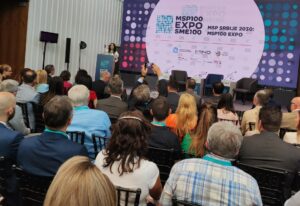
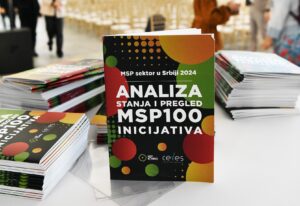
The round table “Entrepreneurship in Serbia – Necessity or Opportunity?”, held today at the Aero Club, attempted to answer the question of whether the small and medium-sized enterprises (SME) sector holds the potential that, by changing the attitude towards entrepreneurship and creating a more favorable economic environment, could seriously help Serbia overcome the difficult economic situation it is in. In a brochure, the Centre for Advanced Economic Studies (CEVES) presents the initial research findings within its advocacy program for fact-based entrepreneurship development in Serbia.
We want to draw the attention of the public, decision-makers, and entrepreneurs themselves to the enormous potential hidden within the small economy, which we have been stifling for years. Currently, experts and the general public are divided on how Serbia can achieve economic progress. According to one view, progress comes exclusively through foreign direct investment (FDI), while in the other camp are those who believe the state's role must be strengthened by actively engaging in the creation/revival of national industrial systems. Both models view entrepreneurship as a „second-rate” economy, a supplementary category created out of necessity or by relying on opportunities generated by the „first-rate” economy, i.e., large enterprises, foreign or state-owned. Some of the research findings that CEVES conducted in the autumn of 2013 are very discouraging, not only for current but primarily for future entrepreneurs:
- The interest of Serbian citizens in entrepreneurship as a first career choice is significantly lower than the European average,
- The dominant two-thirds of citizens wish to be employed in the public sector,
- Necessity and „survival“ are highlighted as motives for starting one's own business, as opposed to achieving financial well-being, personal and for the community (only creativity is encouraging, at the top),
- The riskiness and uncertainty of the business environment, the constant change of regulations, and increased distrust in the fairness of the state seriously discourage entrepreneurship,
„We want to counter the aforementioned negative attitudes with the facts that CEVES has arrived at through its research. Namely, in previous years in Serbia, small and medium-sized enterprises and entrepreneurs created jobs while large enterprises lost them during restructuring, and almost half of today's large enterprises, the healthier ones, grew out of them.“ – stated Ms. Kori Udovički, Director of the Centre for Advanced Economic Studies. Some of the most important findings showed that:
- SMEs contributed three-quarters (72%) to the total employment of business entities in 2012,
- In the total growth of enterprise income (excluding smaller entrepreneurs who do not pay VAT and for whom we have no data) from 2005-2012, the SME sector participated with more than half (53%),
- The small economy contributes almost half of Serbia's export value, and of the top 1,000 exporters, as much as about 60% is from the SME sector. Furthermore, SMEs proved to be „more resilient” to the impact of the global crisis; their exports grew faster from 2008 to 2012 than the exports of large enterprises.
CEVES research indicated that the largest group of Serbia's small economy grew by relying on domestic demand, acting as intermediaries/suppliers to citizens, large systems, or the state. Among the SME champions, we also find a group that based its growth/development on domestic demand and, after strengthening economically, found opportunities in foreign markets. Finally, there are also SMEs that, thanks to innovations or competitive advantages in highly specialized areas, have found opportunities in foreign markets. Support for entrepreneurship and SMEs is not provided through subsidies or donations, but through a stimulating environment, by ensuring concrete conditions necessary for long-term visions to be realized and developed. Specific needs and support measures for the small economy can only be accurately assessed and developed through greater knowledge of facts about entrepreneurship and close dialogue between the state and entrepreneurs. We believe that Serbia will hardly overcome its economic problems if it does not rely more on the energy and creativity of hundreds of thousands of people who are entrepreneurs today, or would gladly become so if society supported them. This will make all those who wish to be entrepreneurs feel more valued and supported, which will in turn encourage society as a whole to more seriously and with greater understanding address the creation of conditions that will foster entrepreneurial success.
[ngg_images source=“galleries“ container_ids=“35″ display_type=“photocrati-nextgen_basic_thumbnails“ override_thumbnail_settings=“0″ thumbnail_width=“240″ thumbnail_height=“160″ thumbnail_crop=“1″ images_per_page=“20″ number_of_columns=“0″ ajax_pagination=“0″ show_all_in_lightbox=“0″ use_imagebrowser_effect=“0″ show_slideshow_link=“1″ slideshow_link_text=“[Show slideshow]“ order_by=“sortorder“ order_direction=“ASC“ returns=“included“ maximum_entity_count=“500″]