It's time for Serbia's economy to stop being a „timid creature“ – as Forbes rightly described it in its Friday article. (By „economy“ we mean those not part of the regime's clientele). In the years since October 5th, when only the Kolubara miners could overthrow the government, this „creature“ has become a beast that can certainly block any regime. Serbia's private sector exports about 20% of GDP, which does not include a significant number of „our“ companies registered abroad. And exporters are „gold.“ They are the safest source of foreign currency and do not depend on state bribes or handouts. They earn 13 billion euros – isn't that a lot?
Not the entire economy is timid. Let's look at Čačak. The city with by far the strongest and most organized domestic economy, by far the largest number of domestic exporting companies per capita – with one of the highest employment rates outside of Belgrade.
It is no coincidence that the people of Čačak led the October 5th events, and are now organizing one of the first citizens„ rallies aimed at changing the local government (information from social media). Čačak has a large number of business associations, all of which are members of a roof association where they cooperate harmoniously on issues of common interest. In Serbia today, we can all become “people of Čačak.".
To those who may worry that „a bird in the hand is worth two in the bush,“ my message is that this bird may have once resembled a dove, but it is now on a sure path to becoming worm-eaten. The economy is still „running“ on the wings of fiscal consolidation from 2014-2018, which allows for increasingly senseless state investments. Protests as such will not threaten it. But such fiscal policy stands on increasingly rotten „legs.“.
„The “disaster„ at TENT in 2021 cost Serbia at least two percent of GDP. Neither that disaster nor the falling canopy were “extraordinary" events, but rather representative ones. Every day, everywhere, some reserves are being depleted, and only occasionally do we visibly pay their price.
In addition, foreign investors have begun to leave Serbia due to the overvalued exchange rate, and domestic exporters are suffocating. The time when investments flowed like rivers from Germany to other European economies is long gone. Now they are moving in the opposite direction.
The overvalued exchange rate is resolved by increasing the productivity of the economy. How much would our productivity increase if we fixed EPS, Telekom, and a few other things? But Aleksandar Vučić cannot do that. Quite the opposite. The second „solution“ is to reduce domestic wages and prices relative to foreign ones. This is always very painful – sometimes as painful as Greece struggled.
The depth of the protests that have engulfed Serbia, and the purity of the reasons and methods by which they were initiated, are a unique opportunity for Serbian entrepreneurs. They can and should be the tipping point that will turn Serbia into an organized country, pulling it back from the path of rushing into prolonged political crisis or rotten despotism. Long-term economic stability and progress are within their reach.
They need to do two things. One is to look up from the usual demands (lower these or those taxes, higher these or those subsidies) and focus on „overarching“ economic measures that will stabilize the country and launch it on the path of order. At this moment, these are primarily policies that will stabilize economic growth while gradually bringing the exchange rate to a realistic level, and reforms necessary to resolve the neuralgic points in the (non)rule of law that are stifling the economy (e.g., how to wrest public enterprises from the clutches of partyocracy).
Entrepreneurs best understand what kind of economic environment they need. Instead of responding to the PKS's call and timidly letting Vučić know that his regime is unbearably corrupt, they should unite themselves – and take a stand. It will then be easy, with some experts, to identify these fundamental policies and reforms and draft a program.
Once they have drafted a program, they should open their wallets and openly – because they are working for all of Serbia – influence the political programs in circulation. And it would be okay if they also initiated at least one. In the history of democracy, from which we learn whether we like it or not, it is common for movements of people with clear interests or beliefs to stand behind political parties and discipline and remind their leaders that they are not working for themselves, but for some legitimate interest.
They know best why their investment in Serbia is not higher. They also know how much better it would be for them and for Serbia if they felt more secure when investing. By remaining silent, waiting, and without a plan (as Forbes states), the insecurity and unsafety of their investments become greater than the „risks“ they would take by acting. Global uncertainty will not subside anytime soon, and public dissatisfaction even less so. The regime does not know how to properly respond to either of these challenges. And instead of productivity, the cancer of corruption and the collapse of institutions will continue to spread through the Serbian economy.
There are rare moments when the interests of the entire economy align so clearly, and they certainly align with the citizens of Serbia. This is one of them. If a larger part of the domestic economy unites, there is truly nothing to fear. The only obstacle lies in (lack of) trust, and difficulties in coordination – common Serbian ailments.
The only real enemy of Serbian entrepreneurs can only be – themselves.
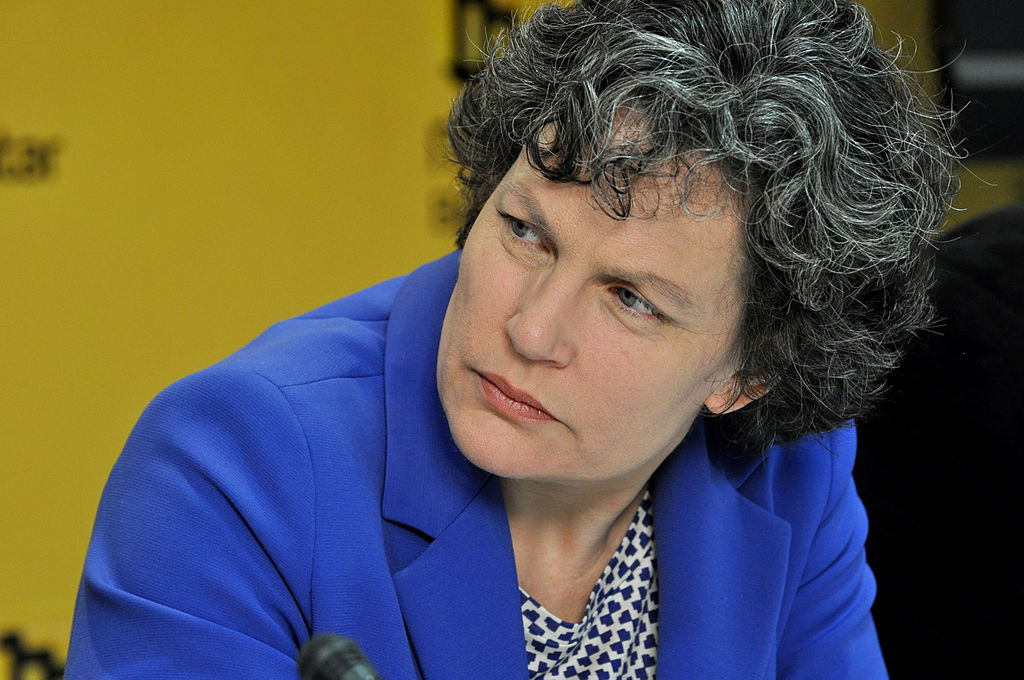
*The author of the text is Kori Udovički, President of the Management Board and Chief Economist of CEVES. Source: New economy