Publications
Assessing and streamlining potentials of Open Balkan Initiative – report on project task 3
Within the project “Assessing and streamlining potentials of Open Balkan Initiative”, a report on project task 3 – Administrative
Within the project “Assessing and streamlining potentials of Open Balkan Initiative”, a report on project task 3 – Administrative

Serbia's economic growth during 2022 was almost half as slow (2.3%) compared to Western Balkan countries (4.1%), significantly slower
At the beginning of the transition, private capital generated just over 20 percent of GDP, and today remaining state-owned enterprises generate less than 10 percent of GDP, but still significantly influence the business environment and hinder the faster growth of domestic small and medium-sized enterprises.
Within the project “Assessing and streamlining the potential of the Open Balkan Initiative”, the Center for Economic Analysis (CEA) from Skopje,

The favorable business environment is mainly set up and adapted for larger foreign companies, and domestic small and medium-sized enterprises do not enjoy it. Also, after 10 years of focus on attracting foreign investment, the question of the further economic profitability of certain measures is justifiably raised – primarily subsidies aimed at employment, in a situation where unemployment in Serbia has been reduced to a reasonable level, and the lack of adequate staff is becoming the number one problem for both foreign and domestic companies,“ said CEVES Director Nemanja Šormaz at a panel discussion organized by the German-Serbian Chamber of Commerce.
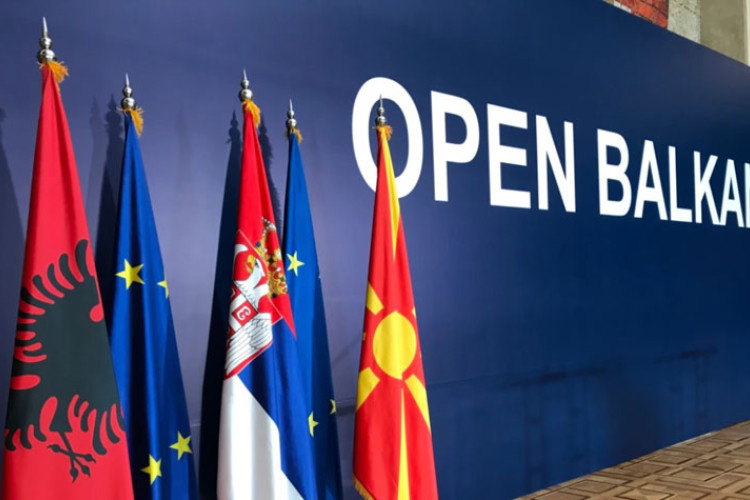
Within the project “Assessing and streamlining the potential of the Open Balkan Initiative”, the Center for Economic Analysis (CEA) from Skopje, has published a report on research task 1: Screening of the Open Balkan Initiative – Country Analyses. Experts from Albania, Bosnia and Herzegovina, Kosovo, Montenegro, North Macedonia, and Serbia (CEVES) participated in the preparation of the report.
Dear friends, partners, associates, donors, During 2022, we advocated for the achievement of sustainable development in Serbia, and especially

Kori Udovički, President and Chief Economist of CEVES, presented an analysis of key global challenges and their implications for SMEs in Serbia.

The Center for High Economic Studies CEVES produced a report in October 2022 that is complementary to the official report of the Statistical Office

Year: 2022. The event Serbia's SMEs 2030: MSP100 Expo was held on June 1, 2022, in MIND Park in Kragujevac, with the aim of pointing out

On Thursday, March 3, 2022, CEVES and TOC organized an online conference within the „Sustainable Development for All“ Platform

Kori Udovički appeared as a guest on the show Marker on TV Insajder on Thursday, January 20, 2022, and as a guest on

The aim of the conference is to present and discuss proposals for improving state aid control and evaluation mechanisms, with a focus on quality

In an interview for Novi Magazin, Kori Udovički, President of the CEVES Management Board, talks about shortcuts and the „red carpet“ reserved only for the biggest

This article was published with minor changes in the weekly NIN on July 30, 2020. Author: Dr Kori Udovički At the moment when
Publications related to the impact assessment of the introduction of the circular economy in three sectors – plastic packaging, electrical
Publications related to the impact assessment of the introduction of the circular economy in three sectors – plastic packaging, electrical and electronic equipment

Author: Dr. Kori Udovički Download the text in PDF The economic measures that the Government has taken or announced so far in response
Author: Dr. Kori Udovički, first published 29.3.2020, revised 1.4.2020. Download the text in PDF The pandemic caught us just when
FDI is significant for developing countries, as it is expected to provide the country with access, in addition to employment,