
Households in the Western Balkans and the European Union have comparable electricity consumption per capita, but the economies of the Western Balkan countries are less energy-efficient than the EU because they consume two-thirds more electricity for every unit of GDP produced.
To produce an equivalent amount of gross domestic product, Western Balkan countries need about 50 percent more energy than EU countries.
In electricity production, Balkan countries predominantly rely on fossil fuels and oil, and are highly energy-intensive. Electricity generation from renewable sources is generally comparable or higher than in the 27 EU countries, but gas and nuclear energy are far less common in the Western Balkan countries – nine percent compared to 36 percent. Over the past six years, regional renewable energy capacities have been growing almost three times slower than in the EU.
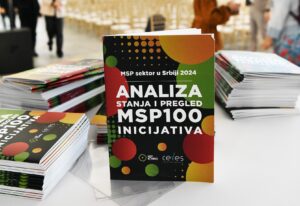
These are some of the conclusions of an analysis conducted by the Centre for Advanced Economic Studies (CEVES) on the potential for ensuring energy supply security in the Western Balkan countries through the promotion of the prosumer market.. The study's authors are Lazar Ivanović and Pavle Medić, and the publication was developed with the support of the regional project “SMART Balkans – Civil Society for Shared Society in the Western Balkans,” implemented by the Centre for the Promotion of Civil Society (CPCD), the Center for Research and Policy Making (CRPM), and the Institute for Democracy and Mediation (IDM), and is financially supported by the Norwegian Ministry of Foreign Affairs (NMFA).
When asked why the Western Balkans are so much less energy-efficient than the EU, Lazar Ivanović notes in an interview with Biznis.rs that, according to the latest Eurostat data for 2022, Western Balkan economies need about 56 percent more energy on average to produce the same amount of GDP as EU countries.
“Although the energy intensity of Balkan economies, measured as total available energy divided by GDP (adjusted for purchasing power parity – PPP), has decreased by 20 percent since 2017, the EU has managed to reduce it even further (by 25 percent), so the region's energy efficiency has actually relatively worsened compared to the EU. The main reason for higher energy intensity in the Western Balkan countries (WB6) is a combination of low electricity prices and decades of insufficiently high investments in energy efficiency,” states Ivanović, adding that, however, significant differences in energy efficiency among the WB6 countries themselves should also be highlighted.
“While the Albanian economy is less energy-intensive than the EU average, the Bosnian economy is almost twice as energy-inefficient, and Serbia is only slightly better than it. The reason for low energy intensity in Albania lies in a combination of two factors – Albania generates electricity almost exclusively from hydropower, which is more energy-efficient than fossil fuels, and nearly 80 percent of Albania's GDP consists of the service and agricultural sectors, which, compared to industry, have low energy intensity,” our interlocutor concludes.
Serbia's large solar potential
Focusing on Serbia as a case study, the CEVES analysis explores the potential and challenges of integrating prosumers into the Serbian energy market. The goal is to simplify the adoption of renewable energy sources by promoting energy efficiency and increasing grid efficiency, flexibility, and resilience.
The document shows that Serbia's estimated technical solar potential could cover almost 80 percent of its current gross electricity production, but despite the potential, the development of the prosumer market in Serbia is quite slow and significantly lags behind other Western Balkan countries, such as Albania, North Macedonia, and even the much smaller Montenegro.
“Serbia, thanks to its favorable geographical location and climatic conditions, has enormous potential for solar energy production. For example, according to the results of a 2022 study, the estimated potential electricity production from solar energy in Serbia is around 30.5 TWh per year, which is almost 80 percent of our current gross electricity production. Furthermore, according to data from the Ministry of Mining and Energy, if solar panels were installed on just ten percent of the total roof area in Serbia, it would create installed capacities of six gigawatts, which is 1.8 times more than our current electricity generation capacities from renewable sources,” explains Lazar Ivanović.
However, the prosumer market in Serbia is developing very slowly. From 2021, when the new Law on Renewable Energy Sources came into force, until the end of May this year, according to official data from Elektrodistribucija Srbije, 2,300 households and only three residential communities have been registered.
Their total installed capacity is less than 19 MW of solar capacity, which is only about 0.5 percent of the planned capacity for 2023.
“When you add the number of industrial prosumers to that, we get a total of about 3,000 prosumers in Serbia who have less than 52 MW of electricity generation capacity. On the other hand, significantly smaller economies like Albania and North Macedonia already had total prosumer capacities exceeding 119 MW and 129 MW, respectively, in the first half of 2023 (they are certainly even higher now). Even Montenegro, with ten times fewer inhabitants than Serbia, managed to achieve as many as 4,000 prosumers with a total installed capacity of 43.5 MW by mid-May this year. Although there have been some positive changes to the Law in recent months, such as a reduction in fees for prosumers, which further reduced their electricity bills, more needs to be done to reverse this trend,” points out Ivanović.
The CEVES study identifies several challenges and barriers hindering the growth of the household prosumer market in Serbia and proposes concrete recommendations for improving the situation.
CEVES analysts believe that it is first necessary to thoroughly inform potential prosumers about obtaining prosumer status, with appropriate support and services from state energy companies, and then to establish a certification scheme for solar panel installers and publish a list of certified installers.
Source: Biznis.rs