The central bank is not a mailbox
Author: Kori Udovički, President of CEVES
The victory of the Student List began, even before it took the reins of power, to encourage institutions to do their jobs. The prosecution is using the „political vacuum“ and, instead of prosecution on political instructions, is taking out of drawers or initiating a series of investigations – on merit. In the case of Alta Bank, the prosecution reacted before the National Bank: as soon as allegations of money outflow appeared, it requested data from the National Bank on Alta's transactions abroad, and then from the police a check of responsible persons within the National Bank itself. The Alta Bank case opens an opportunity for employees of the National Bank, an institution that is constitutionally, and seemingly by its structure, independent, to do the same. In reality, all these years the National Bank has been independent of everyone except its governor, who we know was not independent of politics. Now that the price for that has been paid with Alta Bank, the governor cannot prevent employees of the National Bank from starting to work according to their professional conscience.
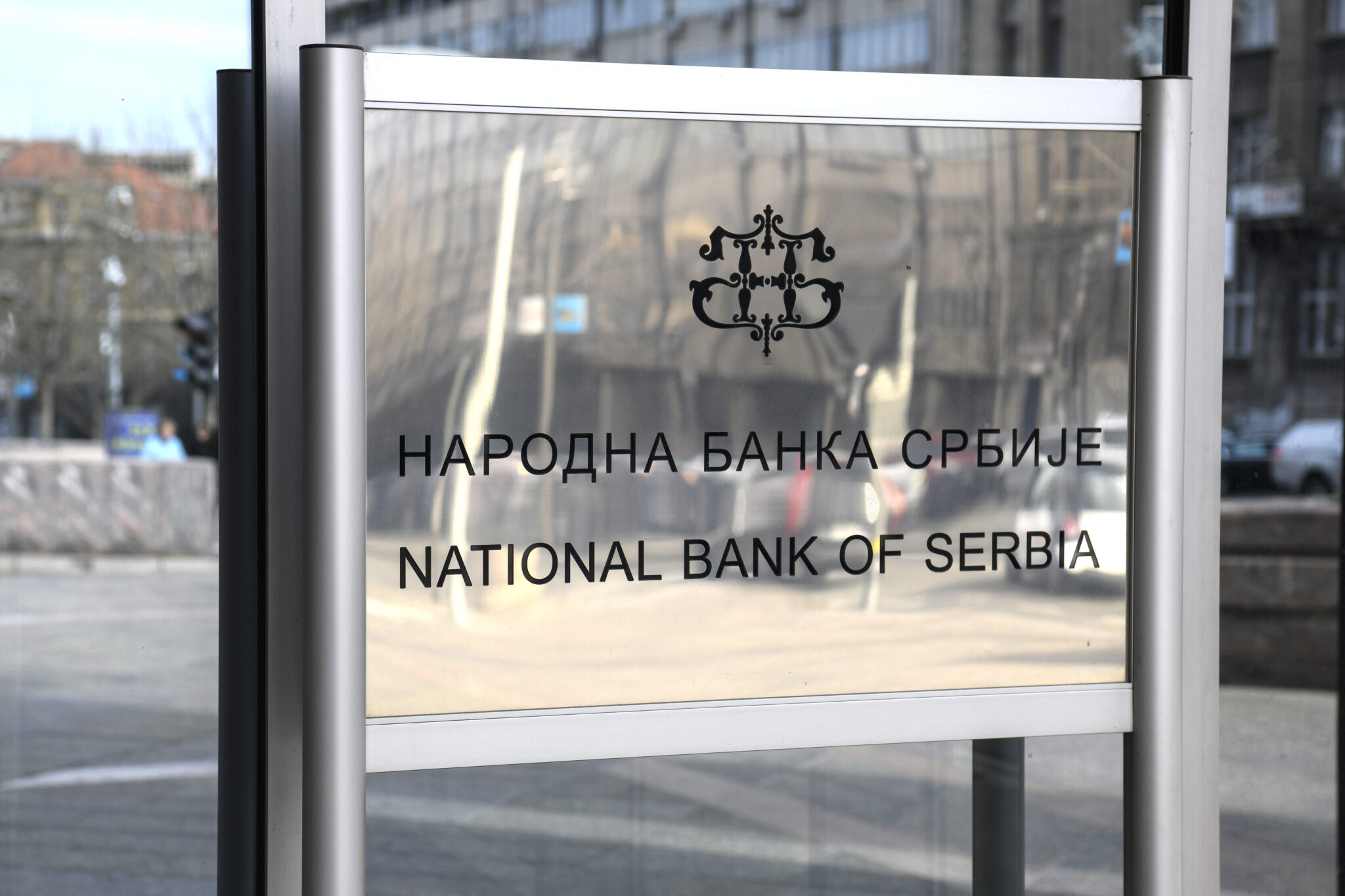
The National Bank revoked Alta Bank's operating license on the night of October 30-31. At the time it was withdrawn, that move was a simple necessity, not a sign of either responsible professionalism or sabotage. The damage had already been done. It does not threaten the banking system, because Alta is not a systemic bank. (The consequences for the companies in the octopus built around it are yet to be seen. They will remain focused on individual companies and their employees). The problem is in everything that happened before that. To the public warning of October 27 that a bank was rapidly moving money abroad, the National Bank responded that transfers were being made through „regular payment channels,“ and the governor, two days later, pointed the finger at those who „lightly express unverified doubts.“ On Friday, during the day, the bank's account was blocked, and people stood in lines until late at night.
Essentially, by delaying its action, the NBS allowed the citizens of Serbia to be robbed. Every dinar that went abroad in the last few days or to related parties who “timely” learned that the situation was escalating and withdrew their deposits – we are paying for it. Savings up to 50,000 euros will be paid by the Deposit Insurance Agency. Insured deposits are paid by the Fund, which is funded by all banks, i.e., their clients, and if the Fund is insufficient, then the budget. Directly, depositors above that amount and large companies, whose claims go into bankruptcy, lose. Public enterprises are also losing, it seems: Elektroprivreda Srbije and Parking servis directed their collections through Alta Bank, and state and large company deposits are not insured. It is hard to imagine that any government would allow public enterprises to remain without compensation, so there is no need to fear for their operations. But that compensation is public money. How much public money was in the bank, we still don't know.
On Saturday, four vice-governors also made statements. They asked the prosecution to determine „when and at what level of management there was knowledge of the identified risks and irregularities,“ how „warnings from employees of competent organizational units“ were considered, and who in the National Bank is criminally responsible for this. For themselves, they say that the actual state of Alta Bank „drastically deviated“ from the reports it submitted. If they expect to absolve themselves of responsibility with this statement, it is both cynical and naive. However, I cannot shake the impression that, in addition to this, I also hear a plea for the bank's management to be brought under control. On paper, they, as members of the Executive Board, along with the governor, constitute the management of the National Bank. The four of them have a majority. In reality, however, the flow of information and decision-making are tightly centralized in the hands of the governor, and the bank is interspersed with professionals and party appointees.
This quartet certainly cannot escape responsibility. The central bank is not a mailbox into which banks drop reports. It receives information about every bank from multiple sources, almost in real-time, which arrives in different parts of the institution. The monetary sector monitors the liquidity of banks and mandatory reserves every day. The foreign exchange and credit relations with foreign countries sector sees conversions and payment transactions with foreign countries. The payment system and compulsory collection, managed by the National Bank itself, see large payments and account blockages. Bank supervision can enter a bank every day. Each of these parts holds a piece of the puzzle. For false reports to hide the bank's collapse with assets of around 1.8 billion euros, everyone would have had to be blind simultaneously. They had to see, if not exactly what was happening, then certainly that something significant was happening, and many participated in the handling of this bank. But if only the governor assembles the puzzle, and others are afraid to talk to each other, the pieces do not become a picture in time. This is the consequence of the reign of terror that the governor managed to establish.
The National Bank also had a quick and quiet instrument with which it could have prevented the money from fleeing abroad. The bank is only allowed to conduct payment transactions and credit operations with foreign countries with the special authorization of the National Bank. Authorization can be revoked from a bank that does not meet the conditions prescribed for these operations, or when there are indications that it will not be able to conduct payment transactions smoothly. The proposal is made by the Foreign Exchange and Credit Relations with Foreign Countries Sector, the decision is signed by the governor, and it can be made within a few hours. It does not close the bank and does not cause queues, but it cuts off precisely the channel through which, according to public statements, money was going to Skopje.

In response to the prosecution, the National Bank played games with it. The requested data was sent three days later, and it was stale, as of September 20th, and for the requested period, it replied that the report could only be submitted after November 4th. Was this a way to cover up the escape of funds from Alta? The response to the prosecution had to go through the governor's hands. The lesson applies to regulated systems as well: prosecution and courts can only act forensically, to determine retrospectively what happened and who is responsible, because abuses in the financial system happen at lightning speed. Money is transferred in a few hours, and banks can be brought down by rumors in a few days. Only the central bank can prevent damage as it occurs, because only it has insight into the money flows while they are happening and the instruments to stop them. Therefore, the central bank must be structured so that the integrity of its work is impenetrable.
The Alta Bank case reveals another important problem in the current structure of the National Bank. The Governor's Council, the body that should be a counterweight to the governor, has had absurdly limited powers since its inception and has been more of a decoration than a supervisory body. The Council can practically only initiate the dismissal of the governor if the governor has already been finally convicted or if their negligent work has caused a significant deviation from the price stability target. A lapse in bank supervision, no matter how serious, is not a reason. And if criminal responsibility has already been established, what are the „deliberations“ of the Council, and then the Assembly? The new government should learn a lesson: expand the powers of the Council, take its composition seriously (not by dismissals but by expansion), and change the way it is elected, so that no one at the head of the National Bank can make arbitrary decisions. Clearly defined responsibility, collegial decision-making, and real internal oversight strengthen the independence of the central bank, as they protect it from the arbitrariness of individuals at its head; this is how central banks in Europe are structured.
The space for abuse has not yet been closed: a payment institution and exchange offices from the same group, affiliated companies, and a bank in North Macedonia are operating. Therefore, two things are urgently needed. First, to investigate and, where possible, recover every dinar that has gone abroad from Alta or to related parties since the end of September. This is the job of the Deposit Insurance Agency as the bankruptcy trustee, the prosecution, and the Administration for the Prevention of Money Laundering, in cooperation with Skopje. Second, the National Bank and the Ministry of Finance must immediately announce what they know: when the temporary measure was imposed, whether conversions and transfers abroad were approved, whether a check of the foreign exchange operations of Alta's depositors was initiated, and how much public money was in the bank on October 26th. I believe that the employees of the NBS can do their part of this work, with the support of the vice-governors, who have a majority on the Executive Board.
At CEVES, we pointed out the risks in the supervision of Alta Bank back in September, in an analysis prepared for the European Commission's expert assessment: the decisions that enabled the rise of this bank are difficult to reconcile with consistent action in the supervision of the National Bank (the analysis is available here), and its further growth was aided by the arrogantly granted preferential access to public sector business. The decisions that enabled this could have been made by a small number of people. However, it is harder to understand how it was possible that neither the employees nor the Governor's Council did anything before the citizens of Serbia lost who knows how many more millions of euros. Now is the opportunity for the employees, the Council, and the vice-governors to draw a line, and to subsequently address all the risks that remain open. The central bank is independent in order to work for the citizens, regardless of who is in power.