Belgrade, May 27, 2019.
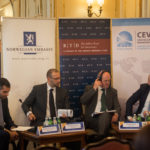
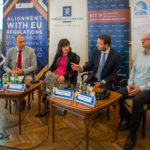
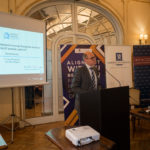
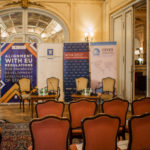
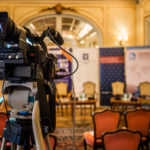
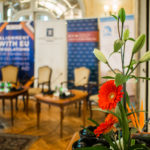
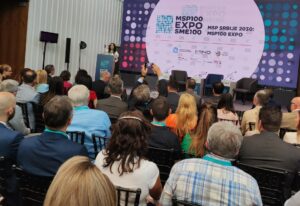
On May 27, 2019, CEVES held a conference titled „State Aid – A Development Locomotive or a Wrong Turn? EU Rules Help in Assessment“. The conference analyzed the development effects of state aid policy in Serbia, as well as ways to enrich the existing approach, guided by the experiences of other European countries, particularly Croatia, Slovenia, and the “Celtic Tiger“ – Ireland. However, the first step towards such a thoughtful approach is full alignment with EU rules. These rules, in addition to protecting and promoting unimpeded competition, also contribute to greater development effects of taxpayer funds utilized.
The conference is part of the project „Alignment with EU Competition Policy, Raising Awareness of Potential Benefits, and Strengthening Capacities of Key Stakeholders in State Aid“. The project was financially supported by the Embassy of the Kingdom of Norway in Belgrade and the Balkan Fund for Democracy of the German Marshall Fund of the United States.
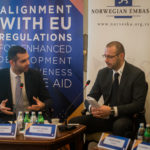
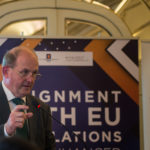
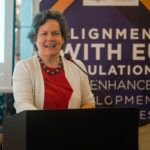
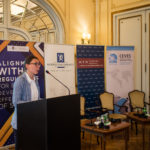
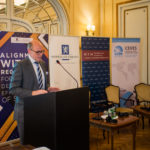
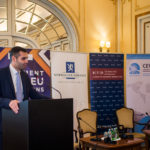
The conference was opened by Mr. Nemanja Šormaz, Director of CEVES, and guests were addressed by His Excellency Mr. Arne Sanes Bjornstad, Ambassador of the Kingdom of Norway to Serbia, and Ms. Gordana Delić, Director of the Balkan Fund for Democracy of the German Marshall Fund of the United States. Mr. Šormaz emphasized the importance of a thoughtful and enriched approach to state aid policy, as well as the connection between the substance and legal form of state aid in the EU. His Excellency Mr. Bjornstad stressed that state aid as a development instrument is important but prone to abuse. To lead to an efficient economy and the equalization of regional differences among EU member states, state aid must be based on clear and firm rules, and when used, it must not be at the expense of other market participants, the ambassador concluded. Ms. Delić expressed satisfaction with the organization of this meeting, highlighting the importance of further alignment of the region's countries with EU regulations.
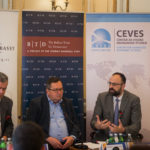
Mr. Međak, moderator of the first panel, spoke about the complexity of resolving state aid issues within Negotiating Chapter 8 – (Competition Law). This was followed by Mr. Antonijević, President of the Commission for the Control of State Aid, who described the current process of alignment with EU regulations, as well as the steps Serbia still needs to take. Ms. List, former head of the Working Group for Chapter 8, described the challenges Croatia faced in this area, which are similar to Serbia's in many ways. Mr. Nenadić, Program Director of Transparency Serbia, pointed out that the situation regarding transparency in Serbia has slightly improved since 2015, as new information is available, but systematic assessments are still lacking. The panelists agreed that transparency in the entire process enables the building of public trust in policies, but also leaves room for analytical research.
The second panel, titled „Investment Promotion and SME Support for Faster Development – The Irish Experience,“ was led by Ms. Kori Udovički, President of the CEVES Management Board, and Mr. Frank Ryan, President of the Management Board of the Irish Development Agency (IDA Ireland). Ms. Udovički also emphasized that EU regulations do not tie the hands of states in acting developmentally in the economy, but rather limit wasteful spending. She added that the policy of attracting foreign investment in the past led to a significant increase in employment in companies with low development effects, but that the trend is improving. However, links between foreign companies and domestic SMEs remain weak. Mr. Ryan pointed out that Ireland's accelerated development is the result of a consistent development program that has lasted for almost 50 years and is based on education, social dialogue, and long-term cooperation of all social institutions. He added that in addition to focusing on education reform and attracting foreign investment, great attention was paid to building domestic SMEs.
The moderator of the third panel, Mr. Šormaz, emphasized that Serbia is at a crossroads, as the issue of restructuring has been closed over time at great cost, but the “fire“ of high unemployment after the economic crisis has been mostly extinguished by attracting labor-intensive companies. Mr. Gazdić, Director of RAS, pointed out that a real turnaround is occurring with the arrival of more complex investment projects that stimulate employment with higher added value, and that support for the development of local suppliers will follow so they can be included in these value chains. Mr. Ryan emphasized that Ireland also stumbled when formulating its development plan until it clearly recognized its strengths and weaknesses. The key was in selecting sectors and setting measurable goals. Mr. Vučković, member of the Fiscal Council, stressed that investment subsidy policy is fundamentally flawed and that the state should interfere very little or not at all in economic flows, but that it is somewhat forced by the fact that many other European countries also rely on it. Better results could be achieved by improving the environment and the rule of law, Vučković concludes.
The last panel was moderated by Ms. Pavlović Križanić, an independent expert in public administration reform. Mr. Plahutnik, former President of the Competition Protection Agency in Slovenia, pointed out that Slovenia has learned from many mistakes made in its state aid policy. The opinion that state aid is exclusively used to support companies in difficulty has been abandoned through alignment with European rules. The implementation of development policies requires an efficient public administration and trained civil servants, in which Serbia lags somewhat, points out Mr. Maravić, Director of the National Academy for Public Administration. Furthermore, Serbia lacks a strategic overarching document that would offer civil servants a vision to follow and signal to the National Academy for Public Administration what kind of capacities need to be built. Mr. Pejović, President of DRI, emphasized that DRI's vision is to help the state manage resources wisely through reliable information. He noted that they have changed DRI's strategic plan by focusing more on the users of public funds and their needs and issues, in order to promote more effective and efficient use of public funds.
Mr. Nemanja Šormaz concluded the conference by reiterating the importance of alignment with EU rules and the need for a broader picture within which development policy needs to be built, of which state aid is only a part. He emphasized that although this conference cannot solve the problem of its lack, it certainly takes a step towards its formulation.